Archives For November 30, 1999

Dear Pilates Teaching Colleagues

UnknownHaving browsed through Peter Fiasca’s book “Discovering Pure Classical Pilates” a couple of years back, I was slightly embarrassed for him. The excessive use of bold type to underline key points concerning heretical misinterpretations of Pilates, and the somewhat polemical subheadings (“The Great Decline: Derivative Styles of the Traditional Method”), smacked of someone losing their marbles.

I’m beginning to have sympathy with his position (perhaps I am losing my marbles), though our viewpoints differ a little. I’m not fanatical about teaching only ‘classical’ Pilates repertoire but I’m with him when he says “Pilates is not physical therapy”. If not losing my marbles then at least I’m becoming less temperate with regard to the realm of Pilates teaching. Sure, we all have different backgrounds, different influences, loves, hates etc. but I’m writing this to ask if we can agree on a few basics.

Such as:

Pilates is not magic, it’s a system that facilitates teaching good movement.

Pilates is therapy only in as much as movement is therapy.

We teach, clients do – in other words, we don’t do Pilates to our clients.

If our clients believe that they can only do Pilates in our presence we have failed.

We don’t work on our clients problems, they do that.

What clients do in their classes is based on what they need, and what they want. If they ask “What do you want me to do next?”, we’ve given them the wrong impression.

Unless we have medical qualifications, we do not diagnose, or treat.

It’s not our job to determine which specific muscles are culpable in, say, an asymmetry (so it’s not appropriate to be saying, for example “Your left obliques are weaker then your right”).

We have the chance to ‘set the bar’ of what’s possible for our clients, and we should set it high.

We have the tools to help people to be better – if there’s no sign of that happening over time then we should be directing them elsewhere.

We should be practicing what we teach – all the time.

We should be taught by another teacher, regularly.

Oh, and perhaps most importantly, strong is not a dirty word.

My Primal moment

August 21, 2013 — Leave a comment

The story that follows is nothing compared to the stories of hundreds of thousands of people who have experienced danger, disaster, war etc. That said, it felt like I learned something useful about myself, and it also felt as though it justified the changes I’ve made to my lifestyle in the last couple of years.

Here goes:
IMG_1388

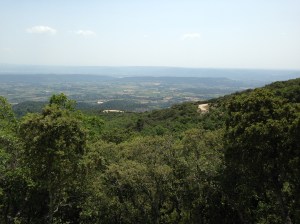
The view, on a good day…

I was recently on holiday in Southern France with my wife’s family. We were staying in a house that is about 350m above sea level, on the side of a hill (mountain?) that is 1050m above sea level. There’s a rough but easy to follow path from the house to the peak, and 3 of us set off to the top one afternoon.

Clouds had been building up, and after only 5 minutes or so we could hear a sound like a strong wind through the trees, that turned out to be a wall of monsoon-like rain coming toward us. Prudently we turned back, but set off once again after the rain had passed, only 10 minutes or so later.

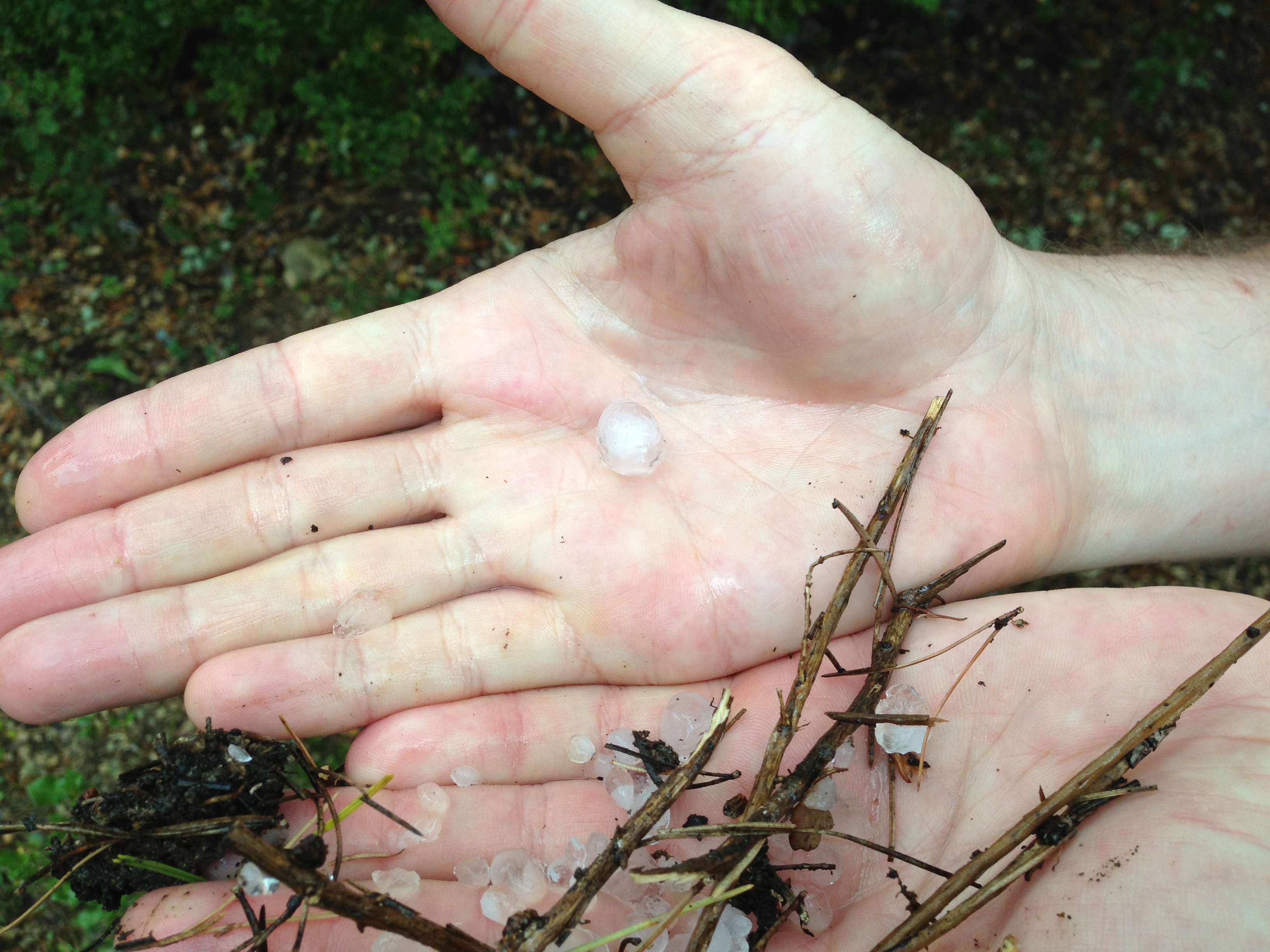
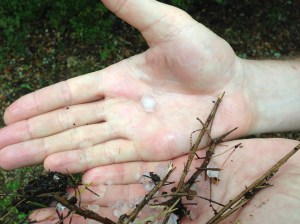
Around the point that we had previously turned back, all 3 of us wearing shoes, shorts and nothing else, passed a family coming down the path, wrapped up in waterproof jackets and looking miserable. I’d be lying if I said we didn’t feel amused by the contrast between our party and theirs, though that was tempered by discovering some of the hailstones that had fallen earlier, probably on that poor family.
IMG_1399

My brother-in-law has spent many summers exploring the area so, when he suggested deviating from the main path to make a more circular than out-and-back journey, we had no doubts about the idea. This is a beautiful part of the world, there are stunning views to admire, and on this morning there was the chance to see the impact of heavy rain on the landscape, some paths still being mini rivers.

Around the time that the sky was turning particularly blue-grey, it was acknowledged that we had missed our uphill path, though on the hillside what appears to be a path can quickly disappear into the undergrowth. The solution was to simply head upwards, negotiating the vegetation in the way. So far, so undramatic. When the rain started we experimented with sheltering under trees and scrutinising the pallor and movement of the clouds, confident of a break in the rain. It didn’t come, so we decided that being on the move was better, and carried on uphill. It had already crossed my mind that I wasn’t feeling the need to hold F (my brother-in-law) responsible for our predicament -weird.

It seems counterintuitive but the vegetation became denser the higher we got, and the way (not path – definitely no path) got steeper. Did I mention the rain was unrelenting? So the purchase on mud/stones/roots was increasingly tricky. I’d had my favourite eggs, bacon and avocado breakfast, and was feeling energetic and strong. P, the youngest of our party, is what I might (in a judgemental moment) call a ‘sugar-burner’ – bread and jam for breakfast. He’s young, and was raised that way, so the choices he makes are more habit than real choice. Anyway, P was beginning to shiver, and the novelty of our situation had evidently worn off. (I later discovered that, in the conditions, his shoes were disintegrating from the inside out, so his crappy breakfast may not have been entirely to blame for his mood).

F was regularly assuring us that we were nearing the top so, of course, it felt as though we weren’t. Amazingly, the rain became more intense and we decided to try to shelter again. This was when I had my ‘epiphany’. Squatting under a tree, with hail cutting through the leaves of our ‘shelter’, and with rain water running into parts of my body that even a shower won’t always get to, I was amazed at how I felt. Again, I wasn’t blaming anyone else, and in years gone by I know I would have been angry with F for leading us to this point. I was reminded of scenes from ‘Platoon’ when the grunts are sitting in the jungle drenched under the incessant rain (yes, I do know that we were in no danger of being shot at). I wasn’t cold (daily cold showers paying off?), instead feeling incredibly resilient. I was a bit concerned about P, whose shivering was intensifying, but at the same time I knew that I was strong enough to carry him to safety if I had to. Our situation was ludicrous and, again to my surprise, I wasn’t at all dispirited.

Deciding once more that we were better off on the move we set off for the ridge, where the vegetation disappears. There is a track running the length of the ridge which was a river a few inches deep at this point. Our way back meant following the track a little more up hill before meeting the path back down to the house. We jogged our way to the top of that path, and then sped up on the descent. Now the rain eased. The path is rough, alternating from stones to gravel, clay to chalk, and with roots here and there to add spice. Once running it was hard to stop, and I have rarely felt as invigorated as I did then – concentrating hard on each footing and feeling agile and powerful. Some 4 hours after we set off we arrived back at the house with, for me at least, a feeling of triumph.

Again, I’m well aware that this isn’t a tale that involves much peril, or endurance, and we all came out of the experience unscathed. Nonetheless, it felt to me that 2 years of ‘primal lifestyle’ had made me better able to cope with adversity. I’m better nourished; stronger; more resilient; my immune system is stronger; and, perhaps most importantly, I’m aware of how empowering it is to, instead of blaming someone else, own responsibility for my actions and any resulting predicament.

Thanks for reading.

The line above is paraphrasing Jaap van der Wal, who is an embryologist, and anatomist. (If you want to go deep into his theory, you can watch “The Architecture of Connective Tissue as a Functional Substrate for Proprioception in the Locomotor System“, or you can go on a slightly easier ride here.) I like this line a lot, perhaps because it resonates with my somewhat contrarian nature, and because the lecture by Dr van der Wal that I attended was both exciting and compelling.

I have used this idea to argue, in a workshop entitled ‘Pilates Made Simple’, that Pilates teachers should be cueing movement rather than muscles. This seems to be a widely accepted idea in the world of strength and conditioning, but not so much in the world of Pilates teaching. I was presenting this workshop last weekend and, as expected (because of the company I was in), whilst the idea of cueing movement instead of muscles wasn’t contentious (I think), the ‘brain doesn’t know muscles’ line met with some reasoned resistance. Specifically, someone with a much deeper understanding of anatomy than mine pointed out that brain’s homunculus – its representation of our body – is partly formed by feedback that it receives from receptors within muscles. This caused me to revise my thought process – or perhaps I should say think a little more deeply/carefully about what I mean.

Here’s what I’ve come up with so far. ‘Our brain knows that you’ve got muscle, but it doesn’t know that you’ve got muscles…’ – that is to say, the ‘picture’ that our brain has of our body (which van der Wal says is based upon ‘fascial architecture’) is nothing like the pictures of muscles that we see in anatomy books. So, your brain knows that there is muscle tissue in the area of your arm that is responsible for moving your wrist closer to your shoulder because it knows the area to stimulate to produce wrist-toward-shoulder movements. Your brain does not ‘know’ that you’ve got a bicep brachii muscle, and a brachialis muscle etc. Again, our brain’s representation of our body is based around fascial architecture, and muscle fibres can be viewed as ‘just’ the elastic parts that move the parts of that architecture in relation to each other.

It follows, for me, that any notion that we can selectively fire muscles is largely an illusion. I know when I fire my bicep, because I’ve learned my musculosketal anatomy, and I can see the bit that’s called biceps changing shape. However, I don’t know what else is working, and I doubt that I’m able to isolate my bicep to make that movement. In other words, if I think ‘shorten my bicep’, my brain ‘knows’ what that looks like, translates it into a movement, and sends the message out ‘move wrist toward elbow’.

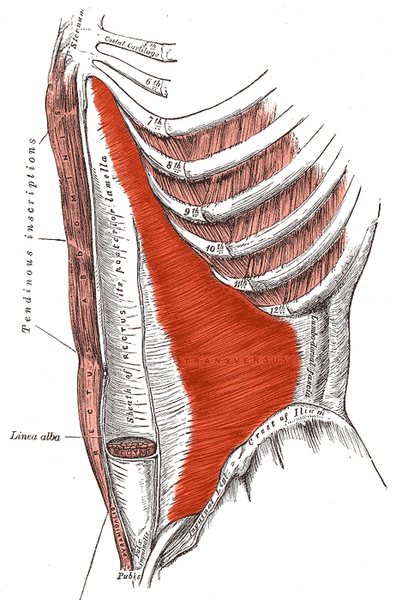
396px-Transversus_abdominisIt seems that one of our favourite muscles to work in Pilates is the transverse abdominis. It’s function is apparently so critical that you can find plenty of online instruction on how to isolate it. ‘HolisticSam’ of http://endyourbackpainnow.com  presents one such example on YouTube. And yet, according to Grays Anatomy “It may be more or less fused with the Obliquus internus or absent.” So it could be that HolisticSam is training  someone to isolate a muscle that they don’t possess. And if that person doesn’t have an identifiable transverse abdominis, does this mean that they cannot stabilise their lumbar spine? Of course not, because their brain doesn’t know how to ‘contract transverse abdominis’, but it does perhaps know how to ‘stiffen lumbar spine’, or maybe ‘ maintain relationship of ribs to pelvis’.

It also seems to me that if we had full conscious control of our individual muscles, then there ought to be far fewer problems with imbalances, asymmetries, and movement disfunction – and those problems should be easier to sort out. This may need further consideration, and it also seems to relate to another bald statement (this one I will claim as my own): ‘Poor muscle balance doesn’t cause poor movement, poor movement causes poor muscle balance’.

As ever, I’d be very happy for a debate to ensue…

Older is not better

May 31, 2013 — 2 Comments

There was a report in the news last week relating to research into the safest place for a baby to sleep. According to the researcher I heard interviewed, the conclusion of the study was that the safest place for a baby to sleep is ‘in it’s own environment’. This struck me as rather curious, since I’d also read recently about the almost constant contact that babies in indigenous cultures enjoy with one or other of their parents.

A couple of days later I was talking to a pregnant woman, and mentioned this, at which point she said “Older is not necessarily better”, and went on to point out that in the past many more babies died than currently do. (This is a favourite theme for anyone rejecting an ancestral model for lifestyle choices. That or, ‘no-one lived past 40’…) It wasn’t the time to be pursuing that debate, but I cycled home musing on it that night.

It’s certainly true that because humans have done something for a long time it does not follow that it’s true. There are many examples of horrific practices that, happily, we have left behind us. I’m also aware that it’s rather easy to romanticise a, perhaps, simpler time, or a simpler life. (Years ago I was on holiday with friends, one of whom was from a farming background, and with far more working class sensibilities than I can pretend to have. We were on the island of Tobago, and I was very taken with the lifestyle of the fishermen in the village that we were staying in. They positively glowed with health, and whilst they obviously had to work hard, they seemed to be quite well rewarded. I was attracted to what seemed to be a very ‘natural’ and healthy life, with a straightforward effort/reward equation, and incurred the disgust of my friend for my privileged ignorance of the realities of hard work/hand-to-mouth existence.)

So, acknowledging that I may be wearing my rose tinted specs, I’m still fascinated by the idea that populations with less of the trappings of western civilization might enjoy a closer connection to their environment than we generally do. And this connection imparts a kind of wisdom that we turned our backs on many decades ago. This is a subject that many writers seem to be delving into at the moment – Mark Sisson’s “Primal Connection” is directly related to this, and it’s a theme that Frank Forencich regularly writes about. Doubtless there are many more. Perhaps people that live in closer contact with their environment make choices for the health of their environment, rather than ease of living, as ‘civilisation’ and the industrial revolution have allowed us to do for the last century and a bit. If you know that your food and shelter is dependent on maintaining something of a symbiotic relationship between yourself and your surroundings then you are highly likely to behave in a way that preserves that relationship. The chances are that this way of living has been ingrained for centuries, so that it is interwoven with your learning, play and life in general as you grow. In other words, perhaps it’s unconscious – you know what’s important without knowing that you know. Again, this is my rose-tinted perception, reinforced by wonderful books like ‘Wild‘ by Jay Griffiths.

In contrast, industrialisation and technology have allowed us to disconnect from the natural world more and more. (Aside from the practical implications, there is a rich vein of research into how this impacts our mental/emotional state). I’m certainly not about to give up a home with central heating, but I can believe that some time amongst trees and plants nourishes me in ways that food cannot.

Perhaps as the basis of postmodern theory (which I understand, highly simplistically, to be something like; ‘reality has been replaced by symbols and simulations of reality’ – apologies to Baudrillard if I’m way off the mark) we seem to have become very good at identifying problems that we have created for ourselves through technological advances, and remedied them with more ‘technology’. MBT shoes seem to be the perfect illustration of this idea – We recognise that there’s a problem with shoes, and pavements, flat ground etc. So instead of removing our shoes, and trying to spend more time with our feet on a more natural surface, we develop shoes that move us further away from true connection to the ground, whilst trying to represent that connection. Duh.

How about ‘ergonomic’ chairs? We recognise that sitting at a desk in front of a computer screen, controlling a mouse, and typing isn’t working out to well for us. No surprises there – we’re not ‘built’ for sitting for long periods, the load on our spines increases two-fold when we go from standing to sitting. The solution is, of course, to design a chair that makes us ‘better’ at sitting. One that actually requires less muscular connection in order to remain in the same dysfuntional position.

We no longer have the innate sense that should tell us that sitting for hours at a time is a bad idea. It reminds me of a conversation I had years ago with a martial arts enthusiast (and osteopath). His theory was that Pilates is essentially the same practice as yoga, tai chi, karate, kung-fu, kendo etc., but modified for a Western sensibility. One of the crucial differences is that, in the countries from which those other movement practices originate, children would be practicing them form a young age – repeating movements over and over again. By the time that they were old enough to question why they were going through these movement patterns, they had no need to ask the question because their body had learned the answer through the action. His argument went on that people doing Pilates often need to ask, or understand intellectually why they are doing particular exercises because they have not had the opportunity to develop that innate ‘body intelligence’.

tumblr_inline_mj1kfdrjMD1qz4rgp

Could this be the perfect squat?
Sorry, can’t find who to credit for this image….

A brief search on YouTube will quickly elicit plenty of video clips of toddlers doing ‘perfect’ squats, deadlifts etc. – the evidence seems fairly clear that we ‘know’ how to move well at a very young age, or at least that moving well is woven into our early development. Things seem to go wrong around the time that we start to put children in shoes, and make them sit for prolonged periods of time. Shoes and chairs are simple examples of technological advances that are creating problems for us, far beyond what surely could have been imagined when they were first conceived. Just as ‘older isn’t better’, newer is not better either. More importantly, increasing the disconnect between ourselves and our environment is a recipe for newer, perhaps more complicated problems (I’m envisioning later scenes in the excellent Pixar animated film ‘Wall-E” – if you don’t know what I’m referring to, please put this blog post down immediately and remedy the situation – I guarantee it’s way more entertaining).

So older is not necessarily better, but wisdom might trump technology. Returning to the subject that I started with, of baby’s safest sleeping place, isn’t it strange to think that a baby should have its own environment, that is separate from that of its parents? Does that occur in any other species of mammal? Is this perhaps a sign of our fundamental loss of sensitivity to our surroundings, that an adult’s sleeping space is inherently dangerous to a baby? Or have we truly figured everything out better than any of our ancestors did?

This workshop was first called “In Pursuit of Pilates Perfection”. It’s since been renamed “Pilates Made Simple”, but the content should encapsulate both ideas.

The aim of the workshop is to share the theories that a growing interest in strength & conditioning has exposed me to, and how they have influenced my Pilates teaching – and changed my life. (If you’ve seen any of my www.paleolates.com blog posts you may have already read references to this). I believe that it should be helpful to anyone teaching Pilates, either mat or studio, at any level, or to any particular population.

Meeting Kelly Starrett, taking his ‘Movement & Mobility’ seminar (and subsequently watching hours of his video blogs), helped me understand that I’d been over-complicating Pilates, and changed my teaching dramatically. Through him, and others in the strength & conditioning world, I learned that there are a set of simple principles and ‘rules’, fundamental to any human position or movement (that I now think Joseph Pilates understood), regardless of age or ability. Applying these ‘rules’ to Pilates allows me to see problems more clearly, and therefore to teach with more clarity, not to mention improving my own practice.

I’ve also gained a whole new set of tools to work on mobility, beyond what Pilates seemed to accomplish, and thereby changed my own body, also making Pilates repertoire feel easier. I hope to be able to pass on the sense of liberation, and satisfaction that it’s given me, with a mixture of theory and practical application that addresses both Pilates mat and equipment repertoire.

The workshop is 6 hours long, with approximately 4 hours spent on theory and relating theory to Pilates repertoire; and 2 hours for exploring the use of various mobility tools to facilitate the application of the theory to movement. There will be some notes provided – intended as a starting point/reminder for participants own thoughts and observations, and certificates of attendance will be issued.

Outcomes

After the workshop you will:

Be reminded of why good movement & positioning always matters 

Know a set of simple rules of movement and positioning, applicable to any activity

Be able to immediately apply those rules to teaching Pilates

Be able to impart those rules to your clients, to accelerate their progress

Have an additional paradigm for recognising movement faults and limitations

Have an array of mobilising tools to address movement limitations

Testimonials:

“A flexible and incredibly easy approach…”

“Fresh ideas – dynamic presentation. A retake on basics that is challenging in a positive way.”

“A brilliant way to improve your practice, and make it easier.”

“A very interesting workshop that has given me various ideas on teaching from cueing to exercise and equipment choice.”

“Rethink how you teach.”

The cost of the workshop is £90.

I seem to have frequent epiphanies these days – or rather the idea that things that I ‘knew’, perhaps in the darker recesses of my mind, suddenly crystallise into sharp and sometimes powerful ideas. Simple things, such as ‘Pilates doesn’t cure back pain, good movement cures back pain.’ Of course, Pilates is an excellent vehicle for teaching good movement, and it certainly ‘fixed’ my chronic low back pain years ago. Now I recognise that it wasn’t that my various Pilates teachers waved their wands and cured me with a dose of magic – they taught me better movement (and positioning) than I was accustomed to practice at that time (God love ’em).

There’s another conversation that can be had later/elsewhere about various methods some Pilates teachers seem to have for appearing to do magic, to be filed under ‘Disempowerment’.

Another closely related epiphany that I had recently (thanks to the wisdom of Kelly Starrett finally sinking in) is that whether we are teachers of Pilates, or yoga, or salsa, or karate, or tai chi, or…almost any other movement discipline, the work is the same – teaching good movement. (Pilates called it ‘right movement’). Some of those disciplines may involve a broader scope than Pilates but, in as much as they are movement disciplines, they should be teaching good movement.

I was leaving a health club today, after teaching, when one of the PTs approached me and asked if I just teach Pilates, or if I teach yoga as well. To my surprise, when I answered “No, I don’t teach yoga.” her immediate reply was “Why?”. My internalised response was something along the lines of: “Because I’ve found a really efficacious method for teaching movement (and spent years trying to do it well), why would I want to train to teach a different method with the same purpose?” I understand that people are drawn to yoga and Pilates in ways that I am not, so no disrespect to the multi-disciplinarians out there. To me, she may as well have said “Why aren’t you a personal trainer?”, given that I think that job should be essentially the same – teaching good movement.

This is what gets me excited at the moment, the idea of helping people in my classes to move, or position themselves well. And Pilates is such a brilliant means to this end. I had another revelation today – that the Hundred is a fantastic assessment tool. It can tell you so much about someone’s awareness and competence – Is their thoracic sufficiently mobile for their head to be well positioned? Can they stabilise their scapula? Are they able to disassociate their arms from their trunk? Can they stabilise their midline under the load of their legs? Can they keep breathing while doing all of the above? And so on. All questions that relate to activities outside the class.

If I can see that someone is struggling with any of those requirements of the Hundred, what are the most effective ways that I have for helping them do better? Obviously there are many ways to skin this particular cat, and I have a question for any teachers that are reading this: Is cueing muscles the best way to help people to move well?

The organisation under which I trained is holding their AGM around the time of writing, and an internationally renowned teacher has been invited to present workshops over the weekend. One of them is apparently titled “Pilates in Clay”*, and offers the chance to sculpt muscles, in clay, onto a pvc skeleton. The description continues: “Once you have made a group of muscles, we will use the Pilates apparatus to understand how they are engaged and in what functional capacity on the reformer.”

Now, it’s probably just me, but isn’t there a significant disconnect between teaching ‘right’ movement and understanding how (which) muscles are engaged and in what functional capacity on the reformer? Perhaps I would discover that my clients left tibialis anterior is over-recruiting during the tendon stretch. Then what? Do I then devise a program of tib ant recruitment timing exercises, along with a stretching program? What would Joseph Pilates have made of this? We might be able to look wise to our clients if we can suggest to them that their serratus anterior is failing to do its job of scapula stabilising correctly, but does that help them to move better? If you know the muscle that’s working/not working, are you a better teacher?

I would argue that this is an illusion. Yes, certainly knowing muscles and their function can aid in understanding movement. And I need to be able to have a conversation with a physiotherapist, osteopath, or surgeon using anatomical language. But when it comes down to the nitty gritty of moving, my brain is simply giving instructions for one body part (or more) to move relative to another, and the muscles are just accessories. Your brain doesn’t actually know that you’ve got muscles. Poor muscle balance is a product of poor movement, not the other way around. Aside from this, focus on muscles when teaching (in addition to appearing clever) can easily disempower the client, and help to reinforce the notion that Pilates is in fact magic, to be performed on you by your teacher. Can’t differentiate between your gastroc and your soleus? Oh dear, this is worse than I thought.

After years of being excited by analysing anatomy, and trying to ‘see’ muscles working/not working in my clients, I’ve been very fortunate to stumble upon the understanding (again, hat off to Kelly Starrett – and Gray Cook, Mike Boyle, Carl Paoli etc.) that Pilates is simple. Brilliant, and simple. The fundamentals of joint positioning for transmission of force, or resistance of load, are the same for Pilates as for any other movement discipline. ‘Force’ and ‘load’ are perhaps not words commonly associated with Pilates, but this is just different written/spoken language to describe the common language of movement.


*This may well be a brilliant and highly instructive workshop, it’s just that the description made me feel like chewing my fingers off.

Too much ‘creativity’.

As ever, the following is a reflection on the practice of Pilates that I am familiar with in the UK, and may not have any relevance/resonance for some, especially sticklers for classical Pilates.

I’ve attended workshops with Romana trained teachers (one in particular) and found that their vigorous adherence to ‘what Mr Pilates taught’ was rigid to the point of dogma, and not appropriate for the broad range of clients that I encounter. At the same time, it seems that we can sometimes forget/overlook the amazing range of repertoire that Pilates himself devised, and how effective so much of that repertoire is.

One of the consequences of living with (and being married to) another Pilates teacher is that many dinner time conversations revolve around shared experiences from our work. A frequent cause of frustration and, thus, topic for conversation, is a group teaching scenario whose dialogue goes something like: (client) “Can I do that exercise standing at the end of the Cadillac?” (teacher) “Sure, which one?” “It’s the one where you stand on the rotating disc and you hold the bar….and I think you bend forward, or something…” “Sorry, I don’t know that one.” “Yes you do. (Teacher X) showed it to me. It was really good.” “I’m pretty sure I don’t know which exercise you mean. What was it for?” “(Puzzled expression) For…? I don’t know – It felt really good.” “If you know why X gave it to you I might be able to figure out what it is – do you remember?”

This could go on for a while, but hopefully you get the gist. Let’s be clear – of course it’s great for clients to enjoy themselves and, in general, I’ve got nothing against people doing exercises that make them ‘feel good’. Then again, too many times I’ve seen people assuming horrible positions that apparently feel really good, teachers included (“Oh no, I would never let a client do this, it just feels really good.”).

There’s a couple of reasons, at least, for the above dialogue to be the cause of frustration. In the first place, while I wouldn’t advocate chapter & verse on whys and wherefores with every exercise, if we know the purpose or objective of an exercise, we have a much better chance of understanding and executing it well. On a couple of occasions when the client may have been able to recreate the feelgood exercise/movement, (typically involving a number of auxiliary props*) I’ve found myself wondering why a particular classical Pilates exercise wouldn’t have done just as well, if not better.

There may be many instances when it’s appropriate to adapt exercises, and also some occasions when it seems necessary to ‘invent’ something to meet the needs of a specific individual (just as Pilates himself did). Is that always the reasoning behind teachers ‘creating’ new exercises? I would guess that the answer is, quite often, no. Gray Cook addresses this in his article ‘Function?’:

We cannot prove this exercise will improve the way you move. It has not been shown to make you more functional. It has not been proven to create better performance or metabolism. It is simply the result of your trainer’s creativity and a surplus of time and equipment. It is an unscientific attempt to reduce your boredom with your current training program. This combination of equipment and movement is a way to entertain you and will distract from the objective tangible results you may not be getting.” (Gray Cook | Function? © 2011 Gray Cook, http://www.graycook.com)

Cook is writing about strength and conditioning coaches but his words seem to apply very well to Pilates (as do a lot of his writings, I can’t recommend him enough). To compound what he says, quite often it seems that there is no identification of, or desire for, specific and measurable results. In other words, aren’t we (no, our clients!) better off with a situation in which someone can say “I can see and feel that I’m able to move further and more easily in this range”, rather than “That stretch feels really nice for my back”?

The other side to this is that mystery exercises help to fuel people’s dependence on a teacher. Any time someone has no clear idea of the purpose, or desired outcome of an exercise the further along the road they are away from empowerment. Perhaps empowerment is not a goal that everyone has for their clients…. certainly it is at the heart of the philosophy at our studio. I’ve referred previously on this blog to conversations I’ve had with clients who’ve said something like “Teacher X has been working a lot on my neck”, when the client seems to think that Pilates is something that is done to them, and it feels like the same territory, to me, as teaching exercises that don’t have a clear intent. Never mind an identifiable name to make it readily repeatable.

One of the fringe benefits for me of having a teacher training program based in our studio is the presence of students working through manuals, practicing repertoire and reminding me of things that I’ve forgotten, because I don’t teach them regularly. The classical repertoire covers so much territory, and is so adaptable (especially in the studio) that I believe there are very few situations that truly require ‘new’ exercises. The classical repertoire, being recognisable and repeatable, also allows us to have some measures of our capability.

In other words, there’s nothing really wrong with Pilates, so we don’t need to be ‘fixing’ it with our creativity.

*There’s a side issue here of adding auxiliary equipment to exercises, to increase the ‘challenge’. Is there ever a good reason to put a foam roll on a reformer?

target-your-shoulders-with-pilates-reformer-routine.300x140

Image from pilates.wonderhowto.com

“No Days Off”

February 15, 2013 — Leave a comment

A couple of weeks back PilatesTree.com asked via Facebook “how much self practice do you really put in?”. It’s a really interesting question to ask professional Pilates teachers, not least because we so often seem to prioritise teaching over working on ourselves. When I first started teaching I used to “do” the class that I was teaching, and it took me a while to realise that this was a really good way to develop some bad habits (never mind that my mat was not the optimum place to be teaching from all the time..).

I’ve struggled for some time with conflicting ideas around Pilates teachers’ responsibility to be aspirational figures (see ‘What should a Pilates teacher look like?‘) and, of course, what we do should be more important than how we look. If we finish teaching a class and then adopt a collapsed posture we’re doing a lousy job of reinforcing what we teach. “Do as I say, not as I do” is rarely a powerful teaching message.

One of the consistent messages of primal/paleo lifestyle authors, and indeed Kelly Starrett, my movement sensei, is that it is our responsibility as human beings to optimally express our genes – to be the best version of Homo sapiens that we possibly can be. This seems eminently reasonable to me, and also a great basis for a slightly different question from the one above: “How often should we be trying to be better?” or better yet – “How often should we be practicing being amazing?”

The answer, naturally, is ‘every day’. Hence, there are NO DAYS OFF. Practice making permanent = we become good at what we do often, which brings us back to the post-class slouching Pilates teacher. A state of fitness is not the result of a couple of hours per week of exercise. That may well form a part of fitness, but if we practice being great for 2 hours a week, and then the remaining 110 hours (assuming a generous 8 hours sleep per night) practicing being mediocre, or worse, we don’t need NASA to tell us what the outcome will be.

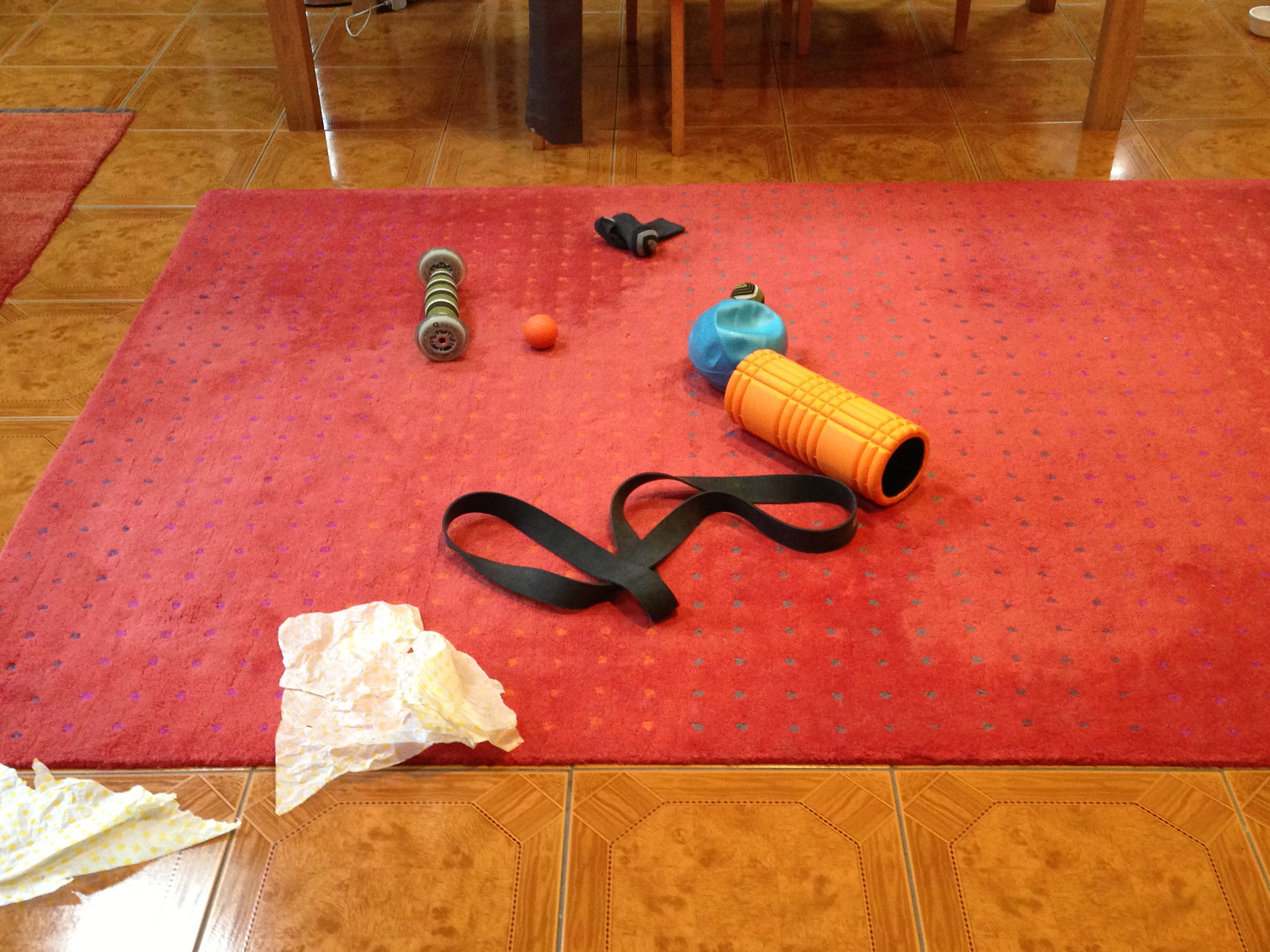
Typical view of living room floor (tissue paper is for the cats to play with).

Typical view of living room floor (tissue paper is for the cats to play with).

I was unusually reticent about answering the original question on PilatesTree….in part because I know that I can’t pretend to do anything resembling a Pilates class more than once a week. Preferring to answer my own question (“How often should we be practicing being amazing?”). As of this year, I do something in pursuit of being better as often as it crosses my mind, and this means at least every day. I don’t work out every day, but I try to practice something that I need to improve daily, whether that be a skill/movement, or mobility. I’m very lucky to be married to a woman who shares my passions/obsessions, and evenings in front of the TV usually involve one, or both of us rolling various body parts on sundry firm objects, or indulging in mutual ‘quad smashing’ (For a visual on how to do this to a massive weightlifter, or your loved one, click here, and remember: “Foam rolls are for children”).

Talk of my idiosyncratic home life may have me straying off the point. Here’s the thing: Yes, practice Pilates, yoga, boot camp, karate…whatever’s your poison (passion?), at least once per week AND practice being a better Homo sapiens every day. In the middle of a TV show I was watching the other night (I put my hand up here and acknowledge that I was making no effort to be better at the time), I heard the line “Clean water is a human right.” It sounded weird at the time – I think we’re often too quick to award ourselves rights (argh! Rabbit hole! Yes, ideally every living human should have access to clean water). Ethical quagmires aside, could we say that “an optimally functioning body is a basic human right”? I hope so, and if we’re agreed upon that, we have to remember that “with rights come responsibilities”.

We have the basic human responsibility to maintain our bodies in such a way that we are able to best express our genetic heritage.

In acknowledgement of the inspiration for this post, here’s Kelly Starrett. Not my favourite MobilityWOD video (and he no longer advocates icing) but maybe it can serve as a way in to the goldmine for you – he’s ALL about being better at EVERYTHING.

It’s a GPP system

My understanding (and I can’t remember whether this was gleaned from reading Pilates’ books, or hearing it said by one or other of the first generation teachers) is that Pilates’ intention was to create a form of physical training that, unlike the kinds of training he had done himself (boxing, for example), would ready one for any conceivable physical challenge. In a nutshell, General Physical Preparedness.

Along with the CrossFit Training Manual, I’ve been reading a fair amount of Gray Cook‘s writing lately, and both have some interesting things to say about specialisation.

“CrossFit considers the sumo wrestler, triathlete, marathoner and power lifter to be ‘fringe’ athletes, in that their fitness demands are so specialised as to be inconsistent with the adaptations that give maximum competency at all physical challenges.” To extrapolate that a little, none of those athletes can be considered truly fit. Heresy alert: Mo Farah is not fit!

In his lecture ‘Developing a Movement Philosophy‘ Gray Cook observes “Every time we specialise we give up our adaptability”, and later “any time we specialize, the human body at some point will start to break down.”

When writing here I invariably seem to get to the point of feeling the need to insert the “What has this got to do with Pilates?” sentence. Well, Pilates is meant to be promoting health – and I do like CrossFit founder Greg Glassman’s concept of ‘health’ being measured on a scale that runs from sickness, through wellness, to fitness – so hopefully Pilates is not simply promoting health, but specifically promoting fitness. (Why settle for being ‘well’, instead of ‘fit’, when ‘well’ puts us already half way to ‘sick’). Fitness requires adaptability, and as Gray Cook implied, specialisation is the enemy of adaptability – and here’s where Pilates steps up, because, again, it’s a GPP system.

At Pilates in Motion Studio we try to instil the idea in our clients that Pilates is a means to an end, not an end in itself. In a very broad sense, we could call that ‘end’ “living better“, and that’s precisely because Pilates is not a method to help us to get better a specific skill, or improve endurance in a particular activity (though of course those benefits may come), but because it should be preparing us for a wide array of challenges, from the mundane to the extraordinary.

By incorporating a mixture of movement patterns, in multiple planes, and by practising the principle of trunk stabilistaion while moving extremities (How many Pilates exercises revolve around this central concept?), we make ourselves more ‘robust to perturbation’ (as the biomechanists might say). Given a definition of fitness that incorporates a notion of adaptability, Pilates (perhaps with the addition of more load) practised with some periods of high intensity, provides a great foundation for general, not specialised, fitness.

The “Fast Diet”, also referred to as the “5:2” diet seems to be all over the UK media at the moment, accompanied by both very positive reviews, and expressions of concern about the dangers of encouraging anyone to fast.

I had this diet described to me as “fast for 2 days (actually, limit calories to 500/600 per day), and eat what you like for 5 days”. The man behind this is Dr Michael Mosley – and he made a television programme all about it, so it must be infallible. Apparently he found evidence that, aside from weight-loss, the Fast Diet is also associated with a range of other health benefits.

I have grave misgivings about any suggestion of ‘eat what you like’, because it seems to suggest that nutrition is unimportant. In other words, there’s an awful lot of ‘food’ around these days of very limited nutritional value. The idea (not Dr Mosley’s, I’m sure, but possibly widely-held nonetheless) that it’s okay to eat crap for 5 days, and then severely restrict your calories for the other 2, sounds like a recipe for very poor nutrition. And food, after all, is meant to nourish us, not simply supply us with calories.

I can’t help but listen to news items about diets without my Paleo-biased brain shouting “It’s what you eat, not how much or how often, that matters”. I’m also trying not to be a 197693_3967280097068_451202589_nfundamentalist about food. I do get a little stressed over vegan parents raising their babies as vegans. Equally, it would take very strong evidence (that I’ve seen no trace of) to persuade me that being vegetarian is as healthy (never mind sustainable) as being omnivorous . At the same time, occasional rants about soy products aside, if someone feels that the way they eat is the best for them, what business is it of mine? None, of course.

Back to ‘diets’. The biggest problem that I can see is that they always appear to be temporary. I may well be wrong, but I doubt that Dr Mosley is proposing that anyone follows the 5:2 ratio for life. This is why I really like the way that I’m eating these days (and why I’m always a little baffled by people asking me if I’m “still doing that diet”) – it’s great because it feels totally sustainable. I choose, generally, not to eat certain things, that were amazingly easy to give up. That’s it. Again, I’m trying not to evangelise.

I was exposed to another idea today (courtesy of Paleo Solution podcast episode 167), attributed to Greg Glassman, founder of CrossFit. It seems like a brilliant approach to body composition, health, and (probably) any other outcome one might desire from a diet. Essentially, set yourself some athletic goals that will really stretch you. The podcast mentions double-bodyweight back squats and a couple of other outlandish strength/gymnastic goals, but we can all figure out athletic achievements that will stretch our individual capabilities. Perhaps it’s mastering the entire Super-Advanced Reformer repertoire, or doing “Romana’s Mat Challenge” 4 times in a row, if Pilates is your thing (though I think a more profound strength challenge would be best). Maybe it’s preparing to climb Kilimanjaro for charity. The point is that, if your goal is sufficiently challenging for you, doing what it takes to reach it will inevitably involve eating appropriately, and making positive changes to your body composition. No 5:2, no GI, no Caveman, no South Beach, no Atkins, no Blood Type (and on and on and on and on)

Perfect! Nourish yourself to achieve amazingness, and enjoy the combined side-effects of better health, and the body composition you’ve dreamed of.