Archives For November 30, 1999

Or, don’t have your feet on the ground

I admit to owning some MBTs once, so I understand the seductive power of shoes that are said to improve your posture (there’s a number of things about my past that I’m not especially proud of…). More recently I’ve used this blog to question the use of technology to ‘fake’ a natural situation in pursuit of a solution, rather than accepting the naturally available solution. Of course, there’s often money to be earned from this kind of virtual reality. In the case of shoes, the rationale seems to be: “There’s a problem with your body – your muscles don’t work like they should, because (unlike a Masai warrior) you’ve been disconnected from the ground. Don’t worry, we’ve come up with a way to make your body work better – by tricking it into action.” (For only X amount of £s/$s)

I think I was more eloquent last time I touched on this, so apologies. I was motivated to revisit the subject by someone that came to one of my classes today. She was wearing some brightly coloured Reebok shoes, that served to highlight the degree to which her feet pointed outwards (“Walking like a duck” in Kelly Starrett-speak). When I spoke to her, as a new participant in the class, she told me that she has knee pain. Unfortunately for her, not surprising at all – we’ve probably all seen similar: thighs rotated in, shins rotated out, and arches collapsed. Easy to imagine that she has lower back pain too. Perhaps that’s why she bought the Reeboks, that I discovered were ‘EasyTone’ (“our EasyTone Essential walking shoe features built-in balance pods that transfer air in response to your stride and create micro-instability with every step.”) There’s a great scenario – someone who is putting excessive rotational force through the soft tissue of her knee joint with every step, because of her leg alignment, wears shoes to increase the instability for her already collapsed feet.

Clearly there are many people wearing MBTs, Fitflops, Shape-Ups and Easytones (there are probably other brands too) who do not have the same structural/alignment challenges, yet the logic still escapes me. Why did I ever think that interfering with the interface between my body and the ground was a good idea? Why did I think that elevating my feet further from the ground would be better for my proprioception and muscle activation?

Just as Michael Jordan asserts in the video clip above, it’s not the shoes! The ‘secret’ is to get your feet on the ground – your hip muscles will work better (and give support to your spine) if your feet work better – It’s not the shoes!

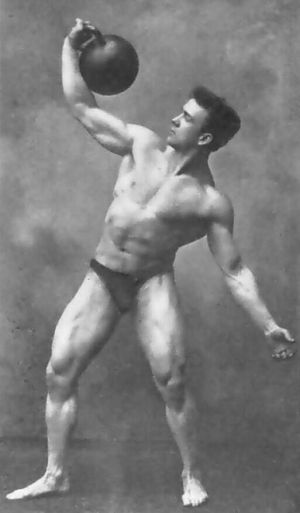
strongfortbellI’ve used this blog previously to write about what I think Pilates is, or is not, so perhaps I shouldn’t need to ask this question. Then again, what I think Pilates is may not sit so well with some of my colleagues. Some of those teachers may have less experience than me, some that disagree (or would if they read this blog) might be ‘master’ teachers – who knows. There are so many of us in the world that it will always be difficult to find a simple, singular explanation of the job/work – if that’s even an appropriate goal.

I love a bit of simplicity, and often feel that we are inclined to complicate things – to hunt for the trees, or even the moss on the trees, and miss the wood that is trying to slap us in the face. I am increasingly embracing the idea of repetition – of exercises, and fundamentals. A few years back I had a conversation with a martial artist, and traditional Chinese medicine practitioner, who struck a chord with me when he opined that yoga is a martial art, and that Pilates is much the same – a bit like a martial art for Westerners. I firmly believe that teachers of Pilates, yoga, and martial arts (spiritual/meditative elements aside) are doing the same thing – teaching ‘good’ (efficient) movement. His argument was that, traditionally, in the East, children would start to learn these movement practices before they were old enough to question the why’s and how’s, and that by the time they were old enough to question, they knew the answers in their bodies – understanding through repetition. Pilates is a little different because it is designed for adults who may want/need to know why they are doing a particular movement. (How many times have you heard: “What’s this (good) for?”)

Whilst I love to talk to the people that I’m teaching about the why’s and how’s, I think that I need to become more at ease with shutting up and allowing people to just ‘do the reps’. I have succumbed, and am certain I’m not alone, to listening to clients niggling complaints, and trying to engineer a variation of an exercise especially for them. I’m sure that Pilates intended his method to be systematic, and sticking to a system is more likely to produce favourable results than regularly deviating from it. Thus, I’m increasingly inclined to side (are there sides?) with the classicists who devote themselves to ‘the work’, and refuse to deviate from the original Pilates repertoire.

The trouble with this is that, however much I’d like to keep thing simple, the ‘original repertoire’ can be hard to pin down. I remember one workshop presenter who would only teach exercises that he had seen archival footage of Pilates teaching, or that he had himself been taught by a first generation teacher (one who had been taught by Joseph). If you’re going to be strict that seems a pretty good start, but what about the repertoire that Pilates taught to a first generation teacher, who did not pass that particular exercise on to the presenter in question? Is it less ‘original’ because one person didn’t think of it, or didn’t feel it was appropriate for this person? So the mat work exercises are the only really reliable record of ‘proper’ Pilates repertoire, because he wrote them down.

And what IS Pilates? There is a growing movement in the UK to create a hierarchy amongst teachers – to set studio trained teachers above mat work teachers. Only last night I read an article suggesting this, because the studio is true Pilates, is ‘the work’ (matwork, as taken from ‘Return to Life’ was, after all, just homework). I suspect, when I hear or read someone talking about ‘the work’ that they’re talking about repertoire – following a system, perhaps. To know Pilates you have to do the work, to become a good teacher you have to do the work. To stay fresh as a teacher you have to do the work.

The repertoire is what separates Pilates from other movement disciplines, yet I don’t know how many times I’ve told potential clients that Pilates is not just a set of exercises – that the exercises are a vehicle for learning principles and fundamentals. In other words Pilates is not Teasers, Hundreds, Footwork, Long Spinals etc. – Pilates is how to move, how to hold/carry yourself. The repertoire is a well thought system for learning those fundamental skills (with a bit of exotica thrown in for those that like/need a challenge). I think the classical repertoire (what I understand it to be, anyway) represents a wonderful mountain to climb. If you reach the peak of executing all the exercises with grace then it’s highly unlikely that you will not be expressing the fundamentals of good movement. I would love to think that everyone who comes through the door of our studio will develop the goal of accomplishing all of those exercises (but I know it won’t happen).

Instead, I will try to teach everyone I work with to move to the best of their capability, and to overcome any challenges they may have in achieving easy, efficient, graceful, powerful motion. Very often the traditional studio equipment will be the ideal vehicle for delivering this, but sometimes I’ll stray. Just yesterday I was teaching a lady for the first time, who has had a history of back problems and is fearful of common daily tasks, not to mention essentials like picking her child up. This wasn’t the first time that I’ve taught a mother who feels scared or unable to pick up their child, and in this circumstance I feel like all other goals take second place. I will try to explain the fundamentals of midline stabilisation, and transmission of load from extremities to centre (I hope we can agree that these are Pilates fundamentals), and I will more than likely use a kettle bell, or weight of some sort to try to teach her how to (in fact, that she can) safely pick her child up. I cannot think of a ‘proper’ Pilates exercise that teaches this fundamental movement as quickly and simply as I can with a weight but that does’t change my belief that I’m teaching Pilates. Am I wrong?

Should I be in existential crisis? I like simplicity, and I want to teach with integrity, AND I think that often the most interesting things occur when edges are blurred, on the boundaries between things/practices/methods. Can I have my cake and eat it? Can I teach Pilates with a kettle bell?

courtesy of encyclopaedia.wikia.com

courtesy of encyclopaedia.wikia.com

I recently wrote a post which was in response to a review of “Becoming A Supple Leopard” by Kelly Starrett. The reviewer took issue with both the lack of reference to scientific studies within the book, and Starrett’s failure to refer to current pain science (by looking only at postural/structural/biomechanical causes of pain). The same theme cropped up in an article called “Back Pain Myths: Posture, Core Strength, Bulging Discs” from the website ‘Better Movement‘.

“Back Pain Myths” states that the majority of physical therapy and corrective exercise done in the USA is based on incorrect assumptions, and concludes a consideration of the evidence for each ‘myth’ as follows: “..there is little evidence to support the idea that we can explain pain in reference to posture or that we can cure pain by trying to change posture..”; “…if a large percentage of pain free people have bulging discs, then how likely is it that a bulging disc is the cause of your back pain?”; and “..the current evidence states that there is nothing magic about core strength as means to prevent or reduce back pain…”. It is not surprising that some might take this as an attack on their practice.

There is no doubt that pain is a very complex subject, and that, especially in the case of chronic pain, the sensation of pain may not be caused by an injury, postural fault, or structural defect. It seems to be clear too that there are many people who have a disc bulge (or several disc bulges), without any symptoms at all. If nothing else this would seem to be good grounds not to rush into a surgical procedure if you are diagnosed with a disc problem. I can’t argue that Todd Hargrove (the author at Better Movement) doesn’t make some legitimate points – it is always good to have our beliefs and assumptions challenged – and we shouldn’t fall into the trap of letting popular wisdom become dogma.

A typical example of the ‘Back Pain Myths’ content is reference to various studies that fail to show any link between poor posture and pain (and it is interesting to read that other studies show a stronger correlation between back pain and stress levels, job satisfaction, exercise etc). Hargrove does refer to a study that seems to suggest a link between poor posture and pain, but hastens to remind us that: “it is important to remember the rule that correlation does not equal causation“. I like this mantra and am inclined to repeat it quite often myself. However, it is perhaps also worth mentioning that non-correlation does not equal non-causation – if a study fails to find a link between one thing and another it does not mean that there is none (I think that this idea is more normally expressed as: absence of evidence does not equal evidence of absence).

Again, we’d be foolish to pretend that someone’s pain isn’t an intricate tapestry, but I’m not inclined to feel that the foundation of the way that I work is being critically undermined by articles such as this. Dysfunction, poor movement patterns and stabilising strategies may not cause someone pain now, but they may cause tissue damage that could result in pain at a later date, or have a knock-on effect on a nearby structure that may become the cause of pain. I know, there’s a lot of ‘may’s in that last sentence, and I believe that’s partly because it’s very difficult to conduct meaningful studies on humans. That is to say, it is probably impossible to account for every variable between study subjects (even if we were to be able to treat humans as we treat beagles, chimps etc.), so we cannot expect any studies of pain triggers, or potential treatments to do better than show some correlation – and we know the rule about that.

I believe that the majority of studies that have been conducted would seem to indicate that exercise of nearly any kind (shall we just say ‘movement’?) is helpful for back pain sufferers, and one kind of movement doesn’t seem to be better than another. I don’t think it matters that we cannot prove the efficacy of a movement discipline, if the result is that people increase their awareness of their own bodies and thereby move and position themselves in a ‘better’ way than they were previously able to. Another thing that would be very hard to study is how the sense of empowerment from a movement practice might impact someone emotionally or psychologically, and thereby have an effect on pain sensation. Failure to prove these things does not make us charlatans.

To return to ‘Back Pain Myths’, I have to acknowledge that Hargrove’s article finishes with questions: “why do these approaches seem to work; how can so many people be wrong; and if these aren’t the true sources of pain, then what is?” So, despite the lack of science, he acknowledges that ‘these approaches’ (from the article we must assume that he refers to making postural improvements, surgery, and core stability training) seem to work. Interesting… Reading further, Hargrove turns out to be a fan of Eyal Lederman, who wrote a famous/infamous article entitled “The Myth of Core Stability” which, for me, speaks volumes about his outlook. You can easily find “The Myth of Core Stability” with a search of the internet if you wish (I tried to include a link but each time I tried to open a page I got an automatic download and, trust me, I’ve more copies of this article than I need). Lederman does an, apparently, able job of rubbishing the notion that there is such a thing as core stability, provided you accept that he fails to actually define what ‘core stability’ is, and doesn’t include an explanatory quote from any of the practitioners whose work/theories he questions. (I’m no lover of the term ‘core stability’, and I suspect this is true of most Pilates teachers. At the same time, I can’t fault anyone for trying to understand and explain how our brain controls our muscles and movement. I’m inclined to think that they are engaged in trying to find explanations for things that Joseph Pilates, for example, recognised as being true without the need or equipment to figure out why.) Lederman’s article is full of scholarly references, and he undermines the theories of those he calls ‘CS practitioners’ by means of those references to conflicting evidence. That SCIENCE trump card again. (One of those studies, at least, involved methods of testing trunk stability hilariously far removed from a ‘real-life’ situation).

Hargrove is a Rolfer and Feldenkrais practitioner. Lederman is an Osteopath. I do not wish to disparage any of these practices, but/and I’ve found it very difficult to track down any proof for their efficacy, or superiority to other practices, on PubMed, or any other websites. Yes, pain is undoubtedly a complex subject, and it is a very good idea for anyone working with people in acute or chronic pain to be aware of current theory. We cannot overlook the psychological/emotional component to, particularly, chronic pain. A very recent experience of mine (anecdotal, sorry) seemed to show that helping someone to understand how to effectively stabilise their midline (core, if you wish) had a positive impact on their confidence, and sense of self-worth, which had been seriously undermined by back pain. Yes, it only ‘seemed’ to help – I cannot prove it, and I don’t suppose the person in question would feel the need to have proof.

If people may be being routinely harmed by a practice then there is clear reason to question it. Does this mean that an unproven movement practice should be avoided, or that it is invalid? Er, NO.

Prove it!

December 1, 2013 — 1 Comment

X YI recently came across “Back Pain Myths” via pilatestree.com, from a website called ‘Better Movement’, and a review of Kelly Starrett’s book ‘Becoming a Supple Leopard’ from a website called ‘Exercise Biology’, that both use science, or the absence of it, to question, or indeed attack, the beliefs and practices of many practitioners working within the sphere of exercise and rehabilitation. Somehow it feels as though this is a popular subject at the moment.

To paraphrase outrageously, the thrust of these is that if scientific studies cannot be found to support an idea, the idea must be wrong. “Back Pain Myths: Posture, Core Strength, Bulging Discs” (to give it its full title) sets out to show that anyone who has suggested that poor posture, lack of core strength, or bulging discs are a likely cause of someone’s back pain has not kept up with the science, and is barking up the wrong tree. (More about ‘Back Pain Myths’ in a post to follow). Our man at Exercise Biology levels the same accusation at Starrett: “He is literally taking your hand and walking you back to the dark ages of physical therapy of the 1950’s, when we used to believe pain comes from joint, tissues, bad posture and movement.” (Good thing that the OED had revised the definition of ‘literally’ to include ‘metaphorically’ as one of its meanings). To be fair, the book’s subtitle: ‘The Ultimate Guide to Resolving Pain, Preventing Injury, and Optimizing Athletic Performance’, leaves Starrett open to this kind of critique (if you are deliberately obtuse and overlook the fact that the book is manifestly about all three things combined, and not just resolving pain).

I don’t suppose that it will be news to many of us in the Pilates world that the causes and manifestation of pain are complex areas, and that there is strong evidence that people can have, for example, multiple disc bulges and no pain. Many of us may be familiar with the work of Butler and Moseley, who wrote the excellent ‘Explain Pain‘, and will know that (oversimplified) pain is a sensation produced by our brain, based on information it has received from somewhere in the body, that it has filtered through near enough every sensory input (physical experience, anecdotes heard, films watched etc) it’s ever received. Small wonder that experience of pain seems so highly individualised.

The International Association for the Study of Pain defines pain as: “An unpleasant sensory and emotional experience associated with actual or potential tissue damage, or described in terms of such damage.” So, the role of pain is to alert us to the likely need to change our behaviour, which seems pretty straightforward, and supports the idea that a poor position could indeed trigger a pain response. Of course, it is complicated, especially in the realm of chronic pain, and when someone experiences pain with no identifiable symptoms. Whilst I am familiar with, at least some (Butler/Moseley), current pain theory, I’m not ready to dismiss the possibility that how someone moves and holds themselves may have a bearing on the inputs that their brain receives. According to Anoop Balachandran (Mr Exercsie Biology), who is a fan of the ‘biopsychosocial’ model of pain, the biomechanics (usually termed PSB: postural-structural-biomechanical) model of pain “is now outdated, unscientific and incomplete..” Incomplete it may be, but if someone has pain that is clearly mechanically derived, and resolves the pain by changing their mechanics, that can’t be dismissed. (Nor would it somehow serve to disprove the idea that there is a valid biopsychosocial model of pain).

I don’t want to give into what may be flawed logic, but I’m sure that many of us will have seen the positive outcomes achieved by helping people to understand and change poor posture or movement patterns. I have no studies to fall back on to prove it, and accept the fact that we cannot prove that Pilates, for example, works. A solution that appears simple can still be a solution. Balachandran writes: “I wrote an article back in 2005 about the myth of posture and pain and ended the article saying Now close your eyes, take a deep breath, slowly slump – and savor the freedom of movement”.” He ‘knows’ that this is a sound thing to be saying, because no-one has yet conducted a study that can show conclusively that there is a relationship between posture and pain. I ‘know’ that it’s a ridiculous statement, because I’ve never seen anyone moving well, or freely, from a slumped position. I know that I went from being a chronic pain sufferer, to being pain-free because I learned better movement patterns, and better positioning strategies. I know that my joints fitting together as well as possible, and the surrounding soft tissues being supple and elastic will help me to avoid dysfunction – and I’m positive that, pain or no pain, that’s a good thing. To quote him again: “The more you talk about biomechanics, joints and movements, the more you are raising the threat level in the brain and making the pain chronic. This is exact reason why current pain science involves educational sessions to change people’s belief about the role of their muscles and joint in pain. Just changing the beliefs about pain has been now shown to lower pain, disability score and improve ROM and movement.” It may be that my beliefs about pain were changed during the first year or so that I took Pilates classes, I’ve no way of knowing that. It may be that counselling would have had a similar result, but we cannot prove it either way. A movement practice, and the changes in habit that followed, in my experience, resolved my back problem. I don’t need to prove whether it was a mental or physical change – it’s not provable – and it doesn’t matter. The practice was empowering to me in some way, maybe many ways, and that’s all that matters.

Ironically, Balachandran refers his readers to this interview, which is fascinating, and also includes the affirmation that Balachandran’s beloved BPS (bio-psycho-social) model of pain actually incorporates the PSB model of pain that he derides, as we saw above, as “unscientific” and “outdated”. His scathing review of ‘Becoming a Supple Leopard’ hinges on it being unscientific – given that Starrett doesn’t mention BPS, and that there is “no single scientific reference...” included. Ah, SCIENCE, the trump card. Balachandran makes it clear on his blog that he favours an ‘evidence-based’ approach to fitness. I believe that the only evidence that can be considered to prove anything comes from a randomised, double-blind study. I’m given to wonder what exercise we can undertake whose efficacy has been proven by studying groups of people, chosen at random, some of whom are undertaking the exercise without being aware of it, and supervised by people who don’t know who’s exercising and who isn’t. Thus, if he’s not basing his exercise on anecdote or observation, he is probably not exercising very much.

I’m not seeking to defend Starrett particularly (though I do think that BASL is a very useful resource), but a superficial reading makes it clear that the primary subject is pain that can be related to movement dysfunction, and that the evidence that he bases his work on is the success that it appears to have over his years of practice as a coach and physio. Isn’t it the case, in the realm of fitness (movement), that anecdote and observation are as reliable evidence of the value of a practice as any other kind?

Efforts to increase our understanding of how the human body works must be helpful, and science doubtless has much still to teach us. Particularly if we are working with people who have long-term chronic pain (especially that which doesn’t appear to have any biomechanics cause), it is helpful to have some understanding of the complexities of the biology of pain. That should not equal throwing the baby out with the bath water.

Starrett’s tagline for his work, attached to all the free material that he published to the internet long before the book, is “All human beings should be able to perform basic maintenance on themselves”. Listening to him it’s easy to believe, financial rewards aside, that he is motivated to try to make a positive difference to people’s lives – to make the world a better place. Perhaps those of us in the Pilates teaching profession all share that same desire.

Is the motivation to write a review of this book (which carries an implicit critique of any of us who’s work is often centred on the PSB model of pain) the desire to educate, to advance debate, or the desire to build a reputation?

71064I have heard Kelly Starrett describing functional movement as ‘a wave of contraction from core to extremity’. This seems to fit very well with the theory of local and global muscles. The idea that we need to stabilise our spine prior to loading/moving is embedded in Pilates. It is easy, too, to find ‘scholarly articles’ on the internet (Paul Hodges, to name one author) exploring this idea, and correlating poor stabilisation in anticipation of movement with lumbar disfunction and injury.

It all seems very logical, but could it be flawed? Things seen in a lab may not have a strong relationship to ‘real life’. The fact that turmeric added to cancer cells in a Petri dish has a measurable negative effect on those cells, does not equate to consumption of turmeric ‘killing’ cancer cells in a living body. Similarly, the research that supports the concept of an anticipatory, local muscle stabilisation strategy may struggle to replicate real life situations, simply because it’s hard to measure a lot of human activity whilst accounting for variables. I imagine it’s really hard to wire someone up to any kind of measuring device and gain significant data if they’re engaged in anything other than fairly pedestrian activity. One of the challenges to the straightforward ‘centre-to-periphery’ concept that I’ve had is its failure to take into account the influence of part of our body coming into contact with the ground, or some other surface. That contact will send feedback to our brains, perhaps triggering further stabilisation strategies, for further anticipated movement or force through the joints. Therefore, the periphery is triggering the action at the centre. Where does that leave our ‘wave of contraction’? Is it blown out of the water, or can it be salvaged?

In the last couple of weeks I met two people who, separately, caused me to start to ruminate on this. One was explaining that her strategy for getting from sitting on the floor to standing was the way it was (alarming, I thought) because she had issues with both her foot and her knee. She was endeavouring to find stability in her foot, and then her knee – working from periphery to centre – on the basis that she needed to have a stable foundation of foot-to-ground before she could stabilise more proximally. It kind of makes sense – you can’t stand a vase on a wobble-board. The other instance was someone who, to my eyes, clearly had habitually internally rotated femurs and matching externally rotated tibias, and was talking about the orthotics that her podiatrist had recommended/prescribed. The podiatrist was apparently relatively disinterested in what was going on at this person’s pelvis (i.e. hip joints) because the thing that needed dealing with was her point of contact with the ground. It felt like a mini-epidemic of periphery to centre thinking. And again, there is a certain logic to this – the lady in question had knee pain. Every time she planted her foot on the ground her inability to stabilise her foot caused an inappropriate load at her knee joint, ergo: stabilise the foot with orthotics.

I should perhaps acknowledge at this point that I’m not at all a fan of orthotics. I can see that they may be a stepping stone toward getting someone’s joints into better positions, but they aren’t a substitute for actually sorting out alignment and strength issues that can have a lasting effect. I’ve worked with too many people who have orthotics for life (i.e.. someone in their 60s who’s had orthotics since their 40s). It seems akin, to me, to putting someone in a neck brace as a long term solution for poor control of their head position.

So, do we have compelling evidence to support an argument that stability actually works from the periphery to the centre (and then back out again)? I don’t think so. In both cases the idea is that a stable point of load, or contact with the ground, is more significant than a stable trunk. I can only assume that the idea is that in that case the trunk will take care of itself. I’ve used the workshop “Pilates Made Simple” to explore the idea that there are three basic demands of any Pilates exercise (that, of course, relate directly to real life) – these are: Stabilising your spine/trunk while moving your extremities; sequentially articulating your spine; and transferring load from your extremities to your centre. The latter is the one that I’m most interested in here – it seems to me to be fundamental to what we teach in Pilates, to functional movement, joint health, longevity etc.

In order to transfer load from your foot to your centre (core, if you like) you need to have control over all the joints in between. If there is a ‘break’ in that chain of force transfer then the load gets absorbed by the more distal joints. This is easy to see in people doing all fours exercises who are not able to effectively stabilise their shoulder blades against their ribcage and consequently feel the load most in their wrists and elbows. (When training I learned that, if a client was injured, Pilates always worked away from the problem – Kelly Starrett talks about “upstream” and “downstream” implications of poor positioning/control. I think the ‘fix’ for an elbow problem will more often than not be found at the shoulder than the wrist – proximal, not distal.) In the medially rotated femur/laterally rotated tibia/orthotic scenario, the orthotics may wedge the foot into a better shape but this won’t transfer into improved hippo control. However, working on laterally rotating at the hip joint whilst maintaining a straight foot (please try this yourself) will have a significant effect on foot activity. This is (for me, at least) very challenging to achieve in open chain exercises, but working on closed chain exercises on Pilates apparatus and standing work in mat classes, seem to really help to manage knee/ankle/foot alignment in open chain exercises.

The short version of all of the above: Yes, feedback from our periphery is instrumental in establishing positions, but we cannot effectively create stability and control from the periphery to the centre, it HAS to work the other way.

Who’s Health?

October 10, 2013 — Leave a comment
image courtesy of healthcare.com

image courtesy of healthcare.com

When Joseph Pilates wrote “Your Health” in 1934 the world was a different place from the one we know now (or, at least, the Western world was). The majority of people would have lived less sedentary lives. Whilst work for many was physically hard, it appears that lines between work and leisure were much less blurred than they are now (e-mail, anyone?) Industrial food giants were largely a twinkle in the eye of their founders and real food, as opposed to food products, would have been the standard. Wheat looked very little like the Frankenstein’s monster of a grain that it is now, and CAFOs (‘concentrated animal feeding operations’) were a couple of decades away. Ancel Keys wouldn’t succeed in demonising saturated fat for another 25-30 years (and, in the absence of CAFOs, animal fat would have been less potentially sinister anyway).

The list of health related differences could probably go on for a while. In short, I suspect that it was a little easier for people to be responsible for their health then than it is now.

What of it? Well, a couple of years ago I was at the house of a client who had a business associate visiting (both American). There was an American news channel on the television, with a discussion of Obama’s universal healthcare policy underway. My two companions were clearly of a Republican persuasion, and vigorously opposed to this socialist notion. As a European I found it utterly bizarre that anyone could be opposed to something that I have taken for granted for my whole life.

I’ve lived and worked in the US, and experienced the surprise of being asked for my credit card details, in the ER, whilst trying to staunch the bleeding from a sizeable wound. I’ve also seen people of apparently limited means handing over large sums of cash in the pharmacy for their monthly prescriptions. How could this be reasonable?

More recently I’ve started to question my knee-jerk position on universal healthcare. I suspect that the Republicans mentioned above are opposed to the idea for financial reasons – I don’t know the details (apparently the ‘Obamacare’ bill runs to more than a thousand pages, so perhaps no one does) but I can imagine that there are potentially lost profits somewhere in the system. There’s little prospect of me profiting from privatised health care, beyond teaching Pilates, so I’m not concerned by that. What I am uncertain about is the degree to which our system allows us to imagine that, collectively, GPs; surgeons; nurses; physiotherapists; pharmacists etc. are responsible for <strong>our</strong> health. We can afford to fail to take care of ourselves, and make poor choices, because there’s a broad safety net of health professionals that are obliged to try to fix us. Clearly not a good recipe for personal responsibility. If we all knew that there would be financial consequences for the poor lifestyle choices that we make wouldn’t we be much more likely to make better choices?

The problem is that the ship of personal responsibility, in this regard, sailed a long time ago. Even if this isn’t you, I bet you know plenty of people who will seek a pill for any ailment, take antibiotics for a cough/cold, or go to their osteopath/chiropractor/physio to get ‘fixed’ if something hurts. If you’re a Pilates teacher I’d be amazed if you have not been asked for a remedy to some physical ill.

And here’s the real problem – we’ve been encouraged to think like this, by both governments and the corporations that ‘help’ them to form policy. Who knows why the food pyramid looks the way it does? Was it the work of a well-meaning but scientifically illiterate committee of politicians, or was it hatched in the subterranean lair of an evil food corporation executive? Probably somewhere in between, but it doesn’t matter anymore. Their work is done and the great majority of us ‘know’, beyond doubt, what healthy eating looks like. We also know that several episodes per week of 30 minutes of moderate intensity exercise are what we need to manage our weight and keep our cardiovascular system in top condition. (This probably requires a post of its own, but don’t we also know that it’s natural for a baby to vomit much of its food…?)

Governments try to protect us from the evils of tobacco, and, to a lesser degree, alcohol, and we justify huge rates of duty because these lifestyle choices place an extra burden on public healthcare. If you manufacture cigarettes you may not advertise your products, because we know all about the health risks associated with your product. However, we enjoy no such protection from the promotional efforts of the corporations, some of whose products purport to be healthy. Nestlé are free to advertise breakfast cereal made with ‘healthy whole grains’, Tropicana are equally free to advertise orange juice, which has the same sugar load as Coca Cola (who, of course, enjoy the same freedom to promote their wares). The list could go on and on – margarine proven to lower cholesterol, sweetened drinks to improve your gut health etc etc.

In these circumstances the odds seem so heavily stacked against us that personal responsibility is hardly an option. Informed choices are only as useful as the information they’re founded on. If governments and corporate giants collude to mislead us, a two-headed monster of misinformation, doing our best can easily become a recipe for ill-health. In these circumstances it seems more than ever that providing universal healthcare is an obligation. If your body were a high performance car, you’d be careful about the fuel you put in, you’d put air in tyres if they looked a little squishy. Perhaps you’d clean it often, and you probably wouldn’t park it where the risk of damage or vandalism was high. In short, you’d probably follow the manufacturers recommendations to keep it in good, if not great condition. This analogy stumbles a little in that our bodies don’t come with a manufacturers warranty, and companion handbook. However, the two-headed monster above has purported to provide one for us. ‘You break it, you pay for it’ seems like a generally appropriate maxim, and could be well applied to healthcare – you abuse and damage your body, you pay to sort it out. However, if you’ve followed the manufacturer’s instructions faithfully, surely it’s their problem?

Dear Pilates Teaching Colleagues

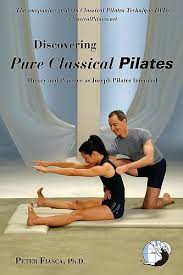
UnknownHaving browsed through Peter Fiasca’s book “Discovering Pure Classical Pilates” a couple of years back, I was slightly embarrassed for him. The excessive use of bold type to underline key points concerning heretical misinterpretations of Pilates, and the somewhat polemical subheadings (“The Great Decline: Derivative Styles of the Traditional Method”), smacked of someone losing their marbles.

I’m beginning to have sympathy with his position (perhaps I am losing my marbles), though our viewpoints differ a little. I’m not fanatical about teaching only ‘classical’ Pilates repertoire but I’m with him when he says “Pilates is not physical therapy”. If not losing my marbles then at least I’m becoming less temperate with regard to the realm of Pilates teaching. Sure, we all have different backgrounds, different influences, loves, hates etc. but I’m writing this to ask if we can agree on a few basics.

Such as:

Pilates is not magic, it’s a system that facilitates teaching good movement.

Pilates is therapy only in as much as movement is therapy.

We teach, clients do – in other words, we don’t do Pilates to our clients.

If our clients believe that they can only do Pilates in our presence we have failed.

We don’t work on our clients problems, they do that.

What clients do in their classes is based on what they need, and what they want. If they ask “What do you want me to do next?”, we’ve given them the wrong impression.

Unless we have medical qualifications, we do not diagnose, or treat.

It’s not our job to determine which specific muscles are culpable in, say, an asymmetry (so it’s not appropriate to be saying, for example “Your left obliques are weaker then your right”).

We have the chance to ‘set the bar’ of what’s possible for our clients, and we should set it high.

We have the tools to help people to be better – if there’s no sign of that happening over time then we should be directing them elsewhere.

We should be practicing what we teach – all the time.

We should be taught by another teacher, regularly.

Oh, and perhaps most importantly, strong is not a dirty word.

The line above is paraphrasing Jaap van der Wal, who is an embryologist, and anatomist. (If you want to go deep into his theory, you can watch “The Architecture of Connective Tissue as a Functional Substrate for Proprioception in the Locomotor System“, or you can go on a slightly easier ride here.) I like this line a lot, perhaps because it resonates with my somewhat contrarian nature, and because the lecture by Dr van der Wal that I attended was both exciting and compelling.

I have used this idea to argue, in a workshop entitled ‘Pilates Made Simple’, that Pilates teachers should be cueing movement rather than muscles. This seems to be a widely accepted idea in the world of strength and conditioning, but not so much in the world of Pilates teaching. I was presenting this workshop last weekend and, as expected (because of the company I was in), whilst the idea of cueing movement instead of muscles wasn’t contentious (I think), the ‘brain doesn’t know muscles’ line met with some reasoned resistance. Specifically, someone with a much deeper understanding of anatomy than mine pointed out that brain’s homunculus – its representation of our body – is partly formed by feedback that it receives from receptors within muscles. This caused me to revise my thought process – or perhaps I should say think a little more deeply/carefully about what I mean.

Here’s what I’ve come up with so far. ‘Our brain knows that you’ve got muscle, but it doesn’t know that you’ve got muscles…’ – that is to say, the ‘picture’ that our brain has of our body (which van der Wal says is based upon ‘fascial architecture’) is nothing like the pictures of muscles that we see in anatomy books. So, your brain knows that there is muscle tissue in the area of your arm that is responsible for moving your wrist closer to your shoulder because it knows the area to stimulate to produce wrist-toward-shoulder movements. Your brain does not ‘know’ that you’ve got a bicep brachii muscle, and a brachialis muscle etc. Again, our brain’s representation of our body is based around fascial architecture, and muscle fibres can be viewed as ‘just’ the elastic parts that move the parts of that architecture in relation to each other.

It follows, for me, that any notion that we can selectively fire muscles is largely an illusion. I know when I fire my bicep, because I’ve learned my musculosketal anatomy, and I can see the bit that’s called biceps changing shape. However, I don’t know what else is working, and I doubt that I’m able to isolate my bicep to make that movement. In other words, if I think ‘shorten my bicep’, my brain ‘knows’ what that looks like, translates it into a movement, and sends the message out ‘move wrist toward elbow’.

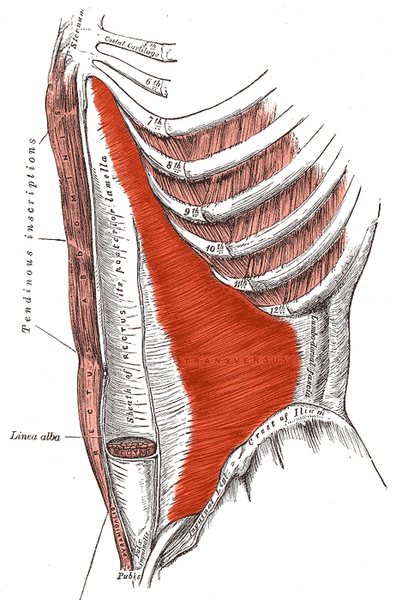
396px-Transversus_abdominisIt seems that one of our favourite muscles to work in Pilates is the transverse abdominis. It’s function is apparently so critical that you can find plenty of online instruction on how to isolate it. ‘HolisticSam’ of http://endyourbackpainnow.com  presents one such example on YouTube. And yet, according to Grays Anatomy “It may be more or less fused with the Obliquus internus or absent.” So it could be that HolisticSam is training  someone to isolate a muscle that they don’t possess. And if that person doesn’t have an identifiable transverse abdominis, does this mean that they cannot stabilise their lumbar spine? Of course not, because their brain doesn’t know how to ‘contract transverse abdominis’, but it does perhaps know how to ‘stiffen lumbar spine’, or maybe ‘ maintain relationship of ribs to pelvis’.

It also seems to me that if we had full conscious control of our individual muscles, then there ought to be far fewer problems with imbalances, asymmetries, and movement disfunction – and those problems should be easier to sort out. This may need further consideration, and it also seems to relate to another bald statement (this one I will claim as my own): ‘Poor muscle balance doesn’t cause poor movement, poor movement causes poor muscle balance’.

As ever, I’d be very happy for a debate to ensue…

This workshop was first called “In Pursuit of Pilates Perfection”. It’s since been renamed “Pilates Made Simple”, but the content should encapsulate both ideas.

The aim of the workshop is to share the theories that a growing interest in strength & conditioning has exposed me to, and how they have influenced my Pilates teaching – and changed my life. (If you’ve seen any of my www.paleolates.com blog posts you may have already read references to this). I believe that it should be helpful to anyone teaching Pilates, either mat or studio, at any level, or to any particular population.

Meeting Kelly Starrett, taking his ‘Movement & Mobility’ seminar (and subsequently watching hours of his video blogs), helped me understand that I’d been over-complicating Pilates, and changed my teaching dramatically. Through him, and others in the strength & conditioning world, I learned that there are a set of simple principles and ‘rules’, fundamental to any human position or movement (that I now think Joseph Pilates understood), regardless of age or ability. Applying these ‘rules’ to Pilates allows me to see problems more clearly, and therefore to teach with more clarity, not to mention improving my own practice.

I’ve also gained a whole new set of tools to work on mobility, beyond what Pilates seemed to accomplish, and thereby changed my own body, also making Pilates repertoire feel easier. I hope to be able to pass on the sense of liberation, and satisfaction that it’s given me, with a mixture of theory and practical application that addresses both Pilates mat and equipment repertoire.

The workshop is 6 hours long, with approximately 4 hours spent on theory and relating theory to Pilates repertoire; and 2 hours for exploring the use of various mobility tools to facilitate the application of the theory to movement. There will be some notes provided – intended as a starting point/reminder for participants own thoughts and observations, and certificates of attendance will be issued.

Outcomes

After the workshop you will:

Be reminded of why good movement & positioning always matters 

Know a set of simple rules of movement and positioning, applicable to any activity

Be able to immediately apply those rules to teaching Pilates

Be able to impart those rules to your clients, to accelerate their progress

Have an additional paradigm for recognising movement faults and limitations

Have an array of mobilising tools to address movement limitations

Testimonials:

“A flexible and incredibly easy approach…”

“Fresh ideas – dynamic presentation. A retake on basics that is challenging in a positive way.”

“A brilliant way to improve your practice, and make it easier.”

“A very interesting workshop that has given me various ideas on teaching from cueing to exercise and equipment choice.”

“Rethink how you teach.”

The cost of the workshop is £90.

I seem to have frequent epiphanies these days – or rather the idea that things that I ‘knew’, perhaps in the darker recesses of my mind, suddenly crystallise into sharp and sometimes powerful ideas. Simple things, such as ‘Pilates doesn’t cure back pain, good movement cures back pain.’ Of course, Pilates is an excellent vehicle for teaching good movement, and it certainly ‘fixed’ my chronic low back pain years ago. Now I recognise that it wasn’t that my various Pilates teachers waved their wands and cured me with a dose of magic – they taught me better movement (and positioning) than I was accustomed to practice at that time (God love ’em).

There’s another conversation that can be had later/elsewhere about various methods some Pilates teachers seem to have for appearing to do magic, to be filed under ‘Disempowerment’.

Another closely related epiphany that I had recently (thanks to the wisdom of Kelly Starrett finally sinking in) is that whether we are teachers of Pilates, or yoga, or salsa, or karate, or tai chi, or…almost any other movement discipline, the work is the same – teaching good movement. (Pilates called it ‘right movement’). Some of those disciplines may involve a broader scope than Pilates but, in as much as they are movement disciplines, they should be teaching good movement.

I was leaving a health club today, after teaching, when one of the PTs approached me and asked if I just teach Pilates, or if I teach yoga as well. To my surprise, when I answered “No, I don’t teach yoga.” her immediate reply was “Why?”. My internalised response was something along the lines of: “Because I’ve found a really efficacious method for teaching movement (and spent years trying to do it well), why would I want to train to teach a different method with the same purpose?” I understand that people are drawn to yoga and Pilates in ways that I am not, so no disrespect to the multi-disciplinarians out there. To me, she may as well have said “Why aren’t you a personal trainer?”, given that I think that job should be essentially the same – teaching good movement.

This is what gets me excited at the moment, the idea of helping people in my classes to move, or position themselves well. And Pilates is such a brilliant means to this end. I had another revelation today – that the Hundred is a fantastic assessment tool. It can tell you so much about someone’s awareness and competence – Is their thoracic sufficiently mobile for their head to be well positioned? Can they stabilise their scapula? Are they able to disassociate their arms from their trunk? Can they stabilise their midline under the load of their legs? Can they keep breathing while doing all of the above? And so on. All questions that relate to activities outside the class.

If I can see that someone is struggling with any of those requirements of the Hundred, what are the most effective ways that I have for helping them do better? Obviously there are many ways to skin this particular cat, and I have a question for any teachers that are reading this: Is cueing muscles the best way to help people to move well?

The organisation under which I trained is holding their AGM around the time of writing, and an internationally renowned teacher has been invited to present workshops over the weekend. One of them is apparently titled “Pilates in Clay”*, and offers the chance to sculpt muscles, in clay, onto a pvc skeleton. The description continues: “Once you have made a group of muscles, we will use the Pilates apparatus to understand how they are engaged and in what functional capacity on the reformer.”

Now, it’s probably just me, but isn’t there a significant disconnect between teaching ‘right’ movement and understanding how (which) muscles are engaged and in what functional capacity on the reformer? Perhaps I would discover that my clients left tibialis anterior is over-recruiting during the tendon stretch. Then what? Do I then devise a program of tib ant recruitment timing exercises, along with a stretching program? What would Joseph Pilates have made of this? We might be able to look wise to our clients if we can suggest to them that their serratus anterior is failing to do its job of scapula stabilising correctly, but does that help them to move better? If you know the muscle that’s working/not working, are you a better teacher?

I would argue that this is an illusion. Yes, certainly knowing muscles and their function can aid in understanding movement. And I need to be able to have a conversation with a physiotherapist, osteopath, or surgeon using anatomical language. But when it comes down to the nitty gritty of moving, my brain is simply giving instructions for one body part (or more) to move relative to another, and the muscles are just accessories. Your brain doesn’t actually know that you’ve got muscles. Poor muscle balance is a product of poor movement, not the other way around. Aside from this, focus on muscles when teaching (in addition to appearing clever) can easily disempower the client, and help to reinforce the notion that Pilates is in fact magic, to be performed on you by your teacher. Can’t differentiate between your gastroc and your soleus? Oh dear, this is worse than I thought.

After years of being excited by analysing anatomy, and trying to ‘see’ muscles working/not working in my clients, I’ve been very fortunate to stumble upon the understanding (again, hat off to Kelly Starrett – and Gray Cook, Mike Boyle, Carl Paoli etc.) that Pilates is simple. Brilliant, and simple. The fundamentals of joint positioning for transmission of force, or resistance of load, are the same for Pilates as for any other movement discipline. ‘Force’ and ‘load’ are perhaps not words commonly associated with Pilates, but this is just different written/spoken language to describe the common language of movement.


*This may well be a brilliant and highly instructive workshop, it’s just that the description made me feel like chewing my fingers off.