Unprincipled Pilates

March 23, 2014 — 3 Comments

previewI’m afraid that I can’t find the original comment, so am unable to quote precisely (even if I had permission) something that I read in the thread of a Pilates related Facebook forum. The comment was written by a teacher, who appears to be considered something of an expert on all things Pilates related (in the particular forum, at least) and was along the lines of ‘Joseph Pilates did not teach principles, he taught exercises, in a specific sequence.’

This is a fascinating idea for me, not because I have a special allegiance to the ‘Whole body health; Whole body commitment; Breathing’ that I believe the PMA refer to as Joseph Pilates’ own guiding principles for Contrology, nor to the 6 principles that Friedman and Eisen presented in their ‘The Pilates Method of Physical and Mental Conditioning’, published in 1980. I think all 8 of these ideas have a valid place in the practice and teaching of Pilates. It is a fascinating idea for me more because the act of teaching almost seems dependent on principles, or is doomed to be rather dull, if not pointless, without them.

Ironically, I attended a class a couple of days ago that reminds me of this. It wasn’t a Pilates class (a more recently developed movement practice) that was distinctly unsatisfying because, it now occurs to me, it appeared to be devoid of principles. It seemed more like nice, but aimless choreographed movement (the teacher led the entire class with her back to the participants – viewing the room in the mirrored wall), and I’d rather save that for when I’m drunk on music and good company, perhaps with a little less choreography.

I’m not suggesting that principles of any sort need to be explicit in anyone’s teaching, but rather that there need to be some fundamentals, something that underpins the exercises/movements being taught. I think of all Pilates exercises fitting into (or straddling a couple of) three basic categories – Stabilising the trunk while moving the extremities; Sequential spinal articulation; Transferring load from the extremities to the centre (which, to me, is part of a circuit with the idea of working from the inside out). These, for me, (because they are invaluable movement skills) form the basis for teaching people to move (or position themselves) well.  And that is what Pilates is, to me, in a nutshell. Of course, this is personal, and I know that the practice of Pilates adds up to more than that for many people. For me, moving well and eating well are the ‘secrets’ to excellent health.

I’m very willing to believe that Pilates did not speak of principles when he was teaching (and perhaps this is what the post on Facebook I referred to was indicating), but I do not accept that they weren’t there. Perhaps that was part of Joseph’s genius – that he didn’t need to be explicit, because the work made it obvious. Whether you’re explicit about some underlying principles of your work or not, I would suggest that they need to be there, if what you teach is to have any meaning for your clients beyond the time they spend in class, or in the studio.

Just Do It

March 11, 2014 — 1 Comment

UnknownI’m currently reading an extraordinary book, called ‘Endgame’, by Derrick Jensen. Jensen paints a very bleak picture of the world, and I’m not sure that I’d recommend it, unless your optimism is of a very robust nature. He’s certainly no fan of multinational corporations, so it’s ironic that a chapter in the book made me think that Nike have the greatest advertising slogan ever. It also made me think that the iconic poster of the first Obama presidential campaign was, unpredictably perhaps, strangely anticipating what seems to have been widely regarded as a disappointing presidency.

Unknown-2

How are the two related to each other? One could argue that the sentiment of the Nike slogan is the exact opposite of hope. Your hope won’t cause a situation to change, but your action might. Whilst ‘Just Do It’ is a call to action, hope is a reason (excuse?) to remain inactive. (It reminds me of a landlord I used to have, back when I had dreams of turning a Brooklyn warehouse building into two wonderful live/work spaces. The roof was leaking and his typical response to our requests for him to get someone to fix it was: “God willing, it will get fixed.”)

As well as seeming to say ‘Stop procrastinating’, or ‘Stop making excuses’, “Just Do It” seems to me to be saying ‘It’s down to you, and you only. (Yes, we can sell you fancy apparel and products to help, but) you’re the one that has to get this done.’

If we hope for a better life/body/world etc. it is as though we pass the mantle of responsibility for that betterment on to someone else, perhaps ‘someone’ supernatural, if we are hoping that God will make things better. In taking action we can claim responsibility for our future, and have a real chance to shape it the way that we would wish it to be. Perhaps President Obama would have done better to borrow Nike’s slogan for his election campaign – maybe that would have given his presidency a little more momentum.

Jensen includes a quote in ‘Endgame’ on this subject, that he attributes to Gringo Stars:

“Hope is the real killer. Hope is harmful. Hope enables us to sit still in the sinking raft instead of doing something about our situation.”

Get out of the raft, and swim. Just Do It.

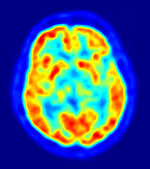
150px-PET-imageA recent, soon to be published study by the prestigious Centre for the Understanding of Nutritional Technology and Science has found that consumption of more than two servings of tofu (a soybean derived food product) per week may lead to a loss of IQ.

The study, conducted over a number of years, looked at the effect of varying degrees of tofu consumption on subjects’ scores in standardised IQ tests. Even when allowing for other factors that have been previously indicated to negatively effect intelligence, the results were “damning”, according to the study’s conclusion. In an interview, a representative of the Centre declared that he and his team are satisfied that they have achieved a significant breakthrough in our understanding of tofu, and have proven beyond doubt that, when consumed in greater than normal amounts, it does make humans more stupid. He added: “We have yet to prove a link between tofu and obesity, but our research continues.”

I’m sure that you will be aware of a number of stories that have made the news in recent years, linking consumption of certain foods, particularly red meat, to various diseases. If you want to read rebuttals of news stories like Red Meat Causes Cancer, or the more recent High Protein Diet as bad as 20 Cigarettes per Day, or simply to read about the problems inherent in these kinds of studies, you can do so here, here and here. This is the territory of people with degrees in medicine or biochemistry, neither of which I have. Instead here are a couple of questions that we should all be asking ourselves when faced with news stories that make these kind of alarming food related claims.

The first is, what’s the agenda? As the articles I linked to above point out, epidemiological studies (that look for patterns, or associations) almost inevitably start out looking for specific patterns – in other words, researchers don’t set out to see if they can spot any patterns at all, they go looking for a specific one. If you go looking for a specific pattern the chances are that you will lean towards finding evidence to support it. Epidemiology might support a hypothesis, but never proves it. T. Colin Campbell, one of the authors of the “China Study”, is well known as an advocate for a vegan diet, and (to quote Wikipedia): “The authors conclude that people who eat a whole-food, plant-based/vegan diet—avoiding all animal products, including beef, pork, poultry, fish, eggs, cheese and milk, and reducing their intake of processed foods and refined carbohydrates—will escape, reduce or reverse the development of numerous diseases.” 

So, if I write a story about the link between tofu consumption and reduced IQ (let’s be totally honest, and in case you didn’t guess, I made that up), you would need to ask yourself why I went looking for such an association in the first place. Perhaps I’m some kind of omnivorous fundamentalist who thinks that soy products are rooted in evil….

The second, and perhaps more significant question is, (to quote Robb Wolf) “What is the mechanism?” Unless there is a viable explanation for why heavy tofu consumption causes a loss of IQ (I just had a thought – imagine if my made up story turns out to be true!), then it’s simply an association that may be a complete coincidence. A favourite analogy is ‘Fire engines cause fires’ – because studies show that there is a strong association between buildings on fire, and the presence of fire engines. Or even better, if you didn’t follow the link to Dr Briffa’s article above: ‘ice cream causes shark attacks’.

Who can blame researchers who want to catch some headlines? Both of the UK broadsheet newspapers that carried this story had some caveats, if you read to the end, but the headlines and the accompanying pictures are what stay with you (do you think tofu seems more sinister when I include a picture of a brain scan?) It’s too bad that the news media we appear to want is that which scares, rather than informs.

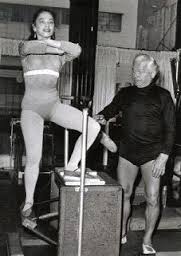
imagesFollowing on from a mention in part 1 of this post, I think that a lot of interesting things happen on the boundaries between disciplines. Kelly Starrett, who has influenced my thinking about Pilates a lot in the last few years, talks about the benefits of sports people from different disciplines talking to, and learning from each other (power lifters talking to gymnasts talking to rowers talking to olympic lifters talking to swimmers/runners etc).

The subject of the first post, and the comments that followed (thank you all for your interest and contribution) made me start to think that there is a problem inherent in classification – in trying to define or draw lines between things. Once again, I find myself a little conflicted – I love simplicity, but…

I’ve found the Classical Pilates Inc DVDs to be an invaluable resource, from the point of view of learning to put the correct name to an exercise, or checking choreography. I’ve learned to assume (who knows how/why) that what is usually referred to as ‘classical’ Pilates, is that which was taught by Romana Kryzanowska and her followers. The “Romana’s Pilates” DVD I have in front of me has the tagline “….the true pilates method as taught by Joseph Pilates”. As an enthusiast of simplicity I am drawn to the ‘this is the way it is supposed to be’ kind of presentation. From watching the DVDs, and taking class with Romana trained teachers, I know that Footwork on the Reformer should be done with all the springs attached, as should the Hundred.

And then again, I was watching part of another DVD the other evening (that is still available from Michelle Larson) of Eve Gentry giving a workshop in 1991. My understanding is that Eve worked alongside Joseph Pilates in New York for close to 30 years – longer than anyone of the other first generation teachers. At the beginning of the workshop she talks about what she learned from Pilates: “I learned about not using too many springs….” This is just one example and I’m sure there are plenty of other instances when the Eve Gentry approach to Pilates differs from the Romana Kryzanowska approach. Ironically, courtesy of this blog I now realise that it’s even more complicated than I thought – the classification ‘Classical Pilates’ requires sub-classification!

I’m not at all interested in entering a discussion about which one is better, or closer to Pilates’ original intentions.  I’m curious as to whether being more definitive about classification does more good than not. This gets back to the original question of what it means to call myself a Pilates teacher. I understand the value of being systematic, and holding true to the principles of rhythm and flow, and, ultimately, I believe (as Eve Gentry says) that I’m trying to teach a concept, not a set of exercises. The exercises are a vehicle for delivering/understanding those principles, and can represent a fantastic challenge for someone who is interested in exploring the limits of their physicality (I can see no need for inventing advanced repertoire). I also believe that Pilates himself would adapt/create exercises for individuals, based on his understanding of their specific needs. Whilst I wouldn’t try to compare myself to Pilates (though I not-so-secretly like to think it may be significant that I was born in the year that he died….), I often use other exercises to teach the principles to certain clients – because I think they will be more effective, or represent a more accessible route to understanding the concepts than a ‘classical’ exercise might. I’m back at the ‘Can I teach Pilates with a kettle bell? question from my previous post – can you teach Pilates with exercises that are not Pilates? According to the blog post that I linked to above, I should be acknowledging to whoever I’m teaching a non-Pilates exercise that I’m not actually teaching them Pilates at that moment. But I think Pilates is a concept, not a set of exercises! Isn’t it perplexing?

Here’s another way that I like to think about this – Can you be good at Pilates? If your answer is ‘Yes’, what does that mean? What does it look like to be good at Pilates? I routinely tell people coming to our studio that there’s no value or point to being ‘good at Pilates’. Who cares if you can perform Pilates repertoire beautifully (or however else we might define ‘good at’)? The point, for me, is to use Pilates to help people be good at, or find easy, everything else that they want or need to do. I think that my job is to teach people to move and position themselves as well as possible, and Pilates is the vehicle that helped me on this journey, and what I feel competent to teach to others.

I do understand the need to honour our heritage, and the original work of Joseph Pilates, and I’m grateful to those teachers and organisations who commit themselves to that. I also agree that a familiarity with the apparatus adds to one’s understanding of Pilates. Somewhat unconsciously, I provoked a bit of a comprehensive vs. mat teachers discussion, with the previous post that I wrote. I have no interest at all in supporting or defending diploma courses in Pilates that require very little actual practice of the method, or that offer certification in a short time. I remain uneasy about attempts to make a strong distinction between mat teachers and comprehensive teachers, because I think our job is to teach people to move well. We will, all of us, bring our unique life experiences to the teaching party and whilst many comprehensive teachers may enjoy an ‘edge’ from their experience of the Reformer’s resistance (and I think you’re a fool if you’re a teacher and you haven’t made an effort to experience the apparatus), I do not believe that we are all inherently better teachers of movement than teachers who are not certified in teaching on the equipment.

As an example, I learned more about working my upper back extensors when trying to squat while holding a weight overhead than I did in years of Pilates repertoire both in the studio and on a mat. That doesn’t mean that I give up on using Pilates to teach people back extension, it means that I’ve got something else up my sleeve AND that someone who has done overhead squats (my CrossFit coach, for example) may be at least as good as me at teaching someone to use their upper back extensors. That may be true of a Pilates teacher ‘only’ trained in the mat work.

So is my claim that my job, as a Pilates teacher, is to teach good movement legitimate?


Or, don’t have your feet on the ground

I admit to owning some MBTs once, so I understand the seductive power of shoes that are said to improve your posture (there’s a number of things about my past that I’m not especially proud of…). More recently I’ve used this blog to question the use of technology to ‘fake’ a natural situation in pursuit of a solution, rather than accepting the naturally available solution. Of course, there’s often money to be earned from this kind of virtual reality. In the case of shoes, the rationale seems to be: “There’s a problem with your body – your muscles don’t work like they should, because (unlike a Masai warrior) you’ve been disconnected from the ground. Don’t worry, we’ve come up with a way to make your body work better – by tricking it into action.” (For only X amount of £s/$s)

I think I was more eloquent last time I touched on this, so apologies. I was motivated to revisit the subject by someone that came to one of my classes today. She was wearing some brightly coloured Reebok shoes, that served to highlight the degree to which her feet pointed outwards (“Walking like a duck” in Kelly Starrett-speak). When I spoke to her, as a new participant in the class, she told me that she has knee pain. Unfortunately for her, not surprising at all – we’ve probably all seen similar: thighs rotated in, shins rotated out, and arches collapsed. Easy to imagine that she has lower back pain too. Perhaps that’s why she bought the Reeboks, that I discovered were ‘EasyTone’ (“our EasyTone Essential walking shoe features built-in balance pods that transfer air in response to your stride and create micro-instability with every step.”) There’s a great scenario – someone who is putting excessive rotational force through the soft tissue of her knee joint with every step, because of her leg alignment, wears shoes to increase the instability for her already collapsed feet.

Clearly there are many people wearing MBTs, Fitflops, Shape-Ups and Easytones (there are probably other brands too) who do not have the same structural/alignment challenges, yet the logic still escapes me. Why did I ever think that interfering with the interface between my body and the ground was a good idea? Why did I think that elevating my feet further from the ground would be better for my proprioception and muscle activation?

Just as Michael Jordan asserts in the video clip above, it’s not the shoes! The ‘secret’ is to get your feet on the ground – your hip muscles will work better (and give support to your spine) if your feet work better – It’s not the shoes!

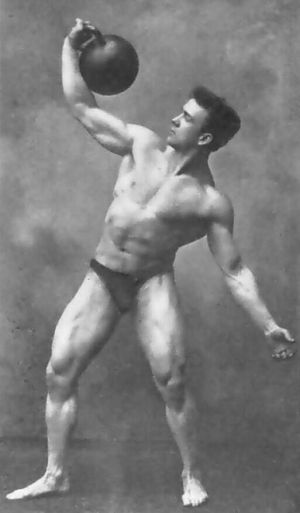
strongfortbellI’ve used this blog previously to write about what I think Pilates is, or is not, so perhaps I shouldn’t need to ask this question. Then again, what I think Pilates is may not sit so well with some of my colleagues. Some of those teachers may have less experience than me, some that disagree (or would if they read this blog) might be ‘master’ teachers – who knows. There are so many of us in the world that it will always be difficult to find a simple, singular explanation of the job/work – if that’s even an appropriate goal.

I love a bit of simplicity, and often feel that we are inclined to complicate things – to hunt for the trees, or even the moss on the trees, and miss the wood that is trying to slap us in the face. I am increasingly embracing the idea of repetition – of exercises, and fundamentals. A few years back I had a conversation with a martial artist, and traditional Chinese medicine practitioner, who struck a chord with me when he opined that yoga is a martial art, and that Pilates is much the same – a bit like a martial art for Westerners. I firmly believe that teachers of Pilates, yoga, and martial arts (spiritual/meditative elements aside) are doing the same thing – teaching ‘good’ (efficient) movement. His argument was that, traditionally, in the East, children would start to learn these movement practices before they were old enough to question the why’s and how’s, and that by the time they were old enough to question, they knew the answers in their bodies – understanding through repetition. Pilates is a little different because it is designed for adults who may want/need to know why they are doing a particular movement. (How many times have you heard: “What’s this (good) for?”)

Whilst I love to talk to the people that I’m teaching about the why’s and how’s, I think that I need to become more at ease with shutting up and allowing people to just ‘do the reps’. I have succumbed, and am certain I’m not alone, to listening to clients niggling complaints, and trying to engineer a variation of an exercise especially for them. I’m sure that Pilates intended his method to be systematic, and sticking to a system is more likely to produce favourable results than regularly deviating from it. Thus, I’m increasingly inclined to side (are there sides?) with the classicists who devote themselves to ‘the work’, and refuse to deviate from the original Pilates repertoire.

The trouble with this is that, however much I’d like to keep thing simple, the ‘original repertoire’ can be hard to pin down. I remember one workshop presenter who would only teach exercises that he had seen archival footage of Pilates teaching, or that he had himself been taught by a first generation teacher (one who had been taught by Joseph). If you’re going to be strict that seems a pretty good start, but what about the repertoire that Pilates taught to a first generation teacher, who did not pass that particular exercise on to the presenter in question? Is it less ‘original’ because one person didn’t think of it, or didn’t feel it was appropriate for this person? So the mat work exercises are the only really reliable record of ‘proper’ Pilates repertoire, because he wrote them down.

And what IS Pilates? There is a growing movement in the UK to create a hierarchy amongst teachers – to set studio trained teachers above mat work teachers. Only last night I read an article suggesting this, because the studio is true Pilates, is ‘the work’ (matwork, as taken from ‘Return to Life’ was, after all, just homework). I suspect, when I hear or read someone talking about ‘the work’ that they’re talking about repertoire – following a system, perhaps. To know Pilates you have to do the work, to become a good teacher you have to do the work. To stay fresh as a teacher you have to do the work.

The repertoire is what separates Pilates from other movement disciplines, yet I don’t know how many times I’ve told potential clients that Pilates is not just a set of exercises – that the exercises are a vehicle for learning principles and fundamentals. In other words Pilates is not Teasers, Hundreds, Footwork, Long Spinals etc. – Pilates is how to move, how to hold/carry yourself. The repertoire is a well thought system for learning those fundamental skills (with a bit of exotica thrown in for those that like/need a challenge). I think the classical repertoire (what I understand it to be, anyway) represents a wonderful mountain to climb. If you reach the peak of executing all the exercises with grace then it’s highly unlikely that you will not be expressing the fundamentals of good movement. I would love to think that everyone who comes through the door of our studio will develop the goal of accomplishing all of those exercises (but I know it won’t happen).

Instead, I will try to teach everyone I work with to move to the best of their capability, and to overcome any challenges they may have in achieving easy, efficient, graceful, powerful motion. Very often the traditional studio equipment will be the ideal vehicle for delivering this, but sometimes I’ll stray. Just yesterday I was teaching a lady for the first time, who has had a history of back problems and is fearful of common daily tasks, not to mention essentials like picking her child up. This wasn’t the first time that I’ve taught a mother who feels scared or unable to pick up their child, and in this circumstance I feel like all other goals take second place. I will try to explain the fundamentals of midline stabilisation, and transmission of load from extremities to centre (I hope we can agree that these are Pilates fundamentals), and I will more than likely use a kettle bell, or weight of some sort to try to teach her how to (in fact, that she can) safely pick her child up. I cannot think of a ‘proper’ Pilates exercise that teaches this fundamental movement as quickly and simply as I can with a weight but that does’t change my belief that I’m teaching Pilates. Am I wrong?

Should I be in existential crisis? I like simplicity, and I want to teach with integrity, AND I think that often the most interesting things occur when edges are blurred, on the boundaries between things/practices/methods. Can I have my cake and eat it? Can I teach Pilates with a kettle bell?

When I was very young there was a radio programme called “Listen with Mother”. We didn’t have a television, and I listened to this nearly every day (with my Mum, of course). Without fail, the show began with “Are you sitting comfortably? Then I’ll begin.” (I’m not sure whether it’s a positive or a negative that this is etched in some recess of my brain).

These days, with the increasing number of studies suggesting that sitting is bad for us, it seems to be a particularly interesting question. The answer may well be “Hell, yes!” (“I’ve got this fantastic well stuffed, reclining, cocooning, i-pod docking super-sofa and I’m as comfortable as anyone ever has been.”) Of course sitting is comfortable, or certainly can be. And, it turns out, it shortens your life, makes you fat, possibly metabolically deranged, possibly pre-diabetic – never mind the possible reduction in range of hip movement.

However, I’d like to leave the bulk of the anti-sitting stuff aside, valid as it is. It seems to be getting a reasonable amount of attention. Instead, I’d like to concentrate on the “comfort” part of the equation. A little while ago I saw a Tweet from @NocturnalOutpos: “Our lust for comfort is the biggest thief in our lives…”, which resonated for me. I think there can be no doubt that the technological advances that have given us easier access to greater comfort have also weakened us as a species, or at the very least made us less resilient (Nassem Nicholas Taleb would say ‘more fragile’).  (Back to) sitting =  more hip dysfunction & back/knee problems, for example. Controlling every aspect of our living environment makes us less well able to cope with the unpredictable. Can we survive without electricity and telecommunications. Most end-of-the-world disaster movies that I’ve seen assume that we can’t (at the same population level).

Evolutionary psychologist Satoshi Kanazawa writes: “All living organisms in nature, including humans, are evolutionarily designed to reproduce. Reproductive success is the ultimate end [goal] of all biological existence.” So, yes, having children is pretty much our reason for existing as a species. The hunter-gatherer existence of our pre-agricultural ancestors would have had its own pragmatic population controls. It is simply not practical to live that semi-nomadic life with lots of children tagging along, and the food supply would have been a limiting factor.

When the agricultural revolution came along things became more comfortable, in that it was possible to stay in the same place, procuring food was no longer everyone’s task, and food became more abundant (though less nutritious). Consequently it was possible for the human population to explode – all the natural population constraints of the HG existence were lifted. Terrific. As a result we now enjoy all the fruits of civilisation, both positive and negative. Negative in that our numbers, ingenuity and technology have allowed us to overcome or resist many of (what I perceive to be) Nature’s attempts to maintain some balance by keeping our numbers in check.

I’m writing this sitting in a cafe on a Saturday morning, as it fills up with people, especially families. It’s noticeable how many couples have several children, clearly born in relatively quick succession, and the part of me that is certain that there are already far too many of us on the planet can’t help inwardly asking ‘Why?’ Why are you having all these children? (In this instance ‘all these’ denoting more than two). And the answer that I come back to is, we are too comfortable. It’s too easy to procure food, shelter, water and energy, so we trick ourselves into thinking that what may be sustainable in at a local, insular level is equally sustainable for humanity as a whole.

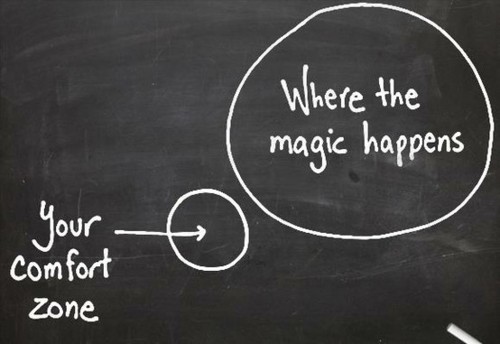
where-the-magic-happensOn a less ‘end-of-the-world’ note, it’s common to talk of one’s ‘comfort zone’ these days. It’s not an unusual idea that we need to leave our comfort zone to make changes, or to achieve more. Being uncomfortable thus is the route to progress, perhaps success, or becoming stronger. And the inverse is true. Comfort makes us weaker. Comfort encourages stasis. Comfort anaesthetises.

I’ll still be sitting comfortably on the sofa for a while this evening, but more fool me if I do so for long.

courtesy of encyclopaedia.wikia.com

courtesy of encyclopaedia.wikia.com

I recently wrote a post which was in response to a review of “Becoming A Supple Leopard” by Kelly Starrett. The reviewer took issue with both the lack of reference to scientific studies within the book, and Starrett’s failure to refer to current pain science (by looking only at postural/structural/biomechanical causes of pain). The same theme cropped up in an article called “Back Pain Myths: Posture, Core Strength, Bulging Discs” from the website ‘Better Movement‘.

“Back Pain Myths” states that the majority of physical therapy and corrective exercise done in the USA is based on incorrect assumptions, and concludes a consideration of the evidence for each ‘myth’ as follows: “..there is little evidence to support the idea that we can explain pain in reference to posture or that we can cure pain by trying to change posture..”; “…if a large percentage of pain free people have bulging discs, then how likely is it that a bulging disc is the cause of your back pain?”; and “..the current evidence states that there is nothing magic about core strength as means to prevent or reduce back pain…”. It is not surprising that some might take this as an attack on their practice.

There is no doubt that pain is a very complex subject, and that, especially in the case of chronic pain, the sensation of pain may not be caused by an injury, postural fault, or structural defect. It seems to be clear too that there are many people who have a disc bulge (or several disc bulges), without any symptoms at all. If nothing else this would seem to be good grounds not to rush into a surgical procedure if you are diagnosed with a disc problem. I can’t argue that Todd Hargrove (the author at Better Movement) doesn’t make some legitimate points – it is always good to have our beliefs and assumptions challenged – and we shouldn’t fall into the trap of letting popular wisdom become dogma.

A typical example of the ‘Back Pain Myths’ content is reference to various studies that fail to show any link between poor posture and pain (and it is interesting to read that other studies show a stronger correlation between back pain and stress levels, job satisfaction, exercise etc). Hargrove does refer to a study that seems to suggest a link between poor posture and pain, but hastens to remind us that: “it is important to remember the rule that correlation does not equal causation“. I like this mantra and am inclined to repeat it quite often myself. However, it is perhaps also worth mentioning that non-correlation does not equal non-causation – if a study fails to find a link between one thing and another it does not mean that there is none (I think that this idea is more normally expressed as: absence of evidence does not equal evidence of absence).

Again, we’d be foolish to pretend that someone’s pain isn’t an intricate tapestry, but I’m not inclined to feel that the foundation of the way that I work is being critically undermined by articles such as this. Dysfunction, poor movement patterns and stabilising strategies may not cause someone pain now, but they may cause tissue damage that could result in pain at a later date, or have a knock-on effect on a nearby structure that may become the cause of pain. I know, there’s a lot of ‘may’s in that last sentence, and I believe that’s partly because it’s very difficult to conduct meaningful studies on humans. That is to say, it is probably impossible to account for every variable between study subjects (even if we were to be able to treat humans as we treat beagles, chimps etc.), so we cannot expect any studies of pain triggers, or potential treatments to do better than show some correlation – and we know the rule about that.

I believe that the majority of studies that have been conducted would seem to indicate that exercise of nearly any kind (shall we just say ‘movement’?) is helpful for back pain sufferers, and one kind of movement doesn’t seem to be better than another. I don’t think it matters that we cannot prove the efficacy of a movement discipline, if the result is that people increase their awareness of their own bodies and thereby move and position themselves in a ‘better’ way than they were previously able to. Another thing that would be very hard to study is how the sense of empowerment from a movement practice might impact someone emotionally or psychologically, and thereby have an effect on pain sensation. Failure to prove these things does not make us charlatans.

To return to ‘Back Pain Myths’, I have to acknowledge that Hargrove’s article finishes with questions: “why do these approaches seem to work; how can so many people be wrong; and if these aren’t the true sources of pain, then what is?” So, despite the lack of science, he acknowledges that ‘these approaches’ (from the article we must assume that he refers to making postural improvements, surgery, and core stability training) seem to work. Interesting… Reading further, Hargrove turns out to be a fan of Eyal Lederman, who wrote a famous/infamous article entitled “The Myth of Core Stability” which, for me, speaks volumes about his outlook. You can easily find “The Myth of Core Stability” with a search of the internet if you wish (I tried to include a link but each time I tried to open a page I got an automatic download and, trust me, I’ve more copies of this article than I need). Lederman does an, apparently, able job of rubbishing the notion that there is such a thing as core stability, provided you accept that he fails to actually define what ‘core stability’ is, and doesn’t include an explanatory quote from any of the practitioners whose work/theories he questions. (I’m no lover of the term ‘core stability’, and I suspect this is true of most Pilates teachers. At the same time, I can’t fault anyone for trying to understand and explain how our brain controls our muscles and movement. I’m inclined to think that they are engaged in trying to find explanations for things that Joseph Pilates, for example, recognised as being true without the need or equipment to figure out why.) Lederman’s article is full of scholarly references, and he undermines the theories of those he calls ‘CS practitioners’ by means of those references to conflicting evidence. That SCIENCE trump card again. (One of those studies, at least, involved methods of testing trunk stability hilariously far removed from a ‘real-life’ situation).

Hargrove is a Rolfer and Feldenkrais practitioner. Lederman is an Osteopath. I do not wish to disparage any of these practices, but/and I’ve found it very difficult to track down any proof for their efficacy, or superiority to other practices, on PubMed, or any other websites. Yes, pain is undoubtedly a complex subject, and it is a very good idea for anyone working with people in acute or chronic pain to be aware of current theory. We cannot overlook the psychological/emotional component to, particularly, chronic pain. A very recent experience of mine (anecdotal, sorry) seemed to show that helping someone to understand how to effectively stabilise their midline (core, if you wish) had a positive impact on their confidence, and sense of self-worth, which had been seriously undermined by back pain. Yes, it only ‘seemed’ to help – I cannot prove it, and I don’t suppose the person in question would feel the need to have proof.

If people may be being routinely harmed by a practice then there is clear reason to question it. Does this mean that an unproven movement practice should be avoided, or that it is invalid? Er, NO.

Prove it!

December 1, 2013 — 1 Comment

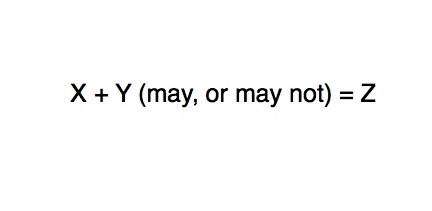
X YI recently came across “Back Pain Myths” via pilatestree.com, from a website called ‘Better Movement’, and a review of Kelly Starrett’s book ‘Becoming a Supple Leopard’ from a website called ‘Exercise Biology’, that both use science, or the absence of it, to question, or indeed attack, the beliefs and practices of many practitioners working within the sphere of exercise and rehabilitation. Somehow it feels as though this is a popular subject at the moment.

To paraphrase outrageously, the thrust of these is that if scientific studies cannot be found to support an idea, the idea must be wrong. “Back Pain Myths: Posture, Core Strength, Bulging Discs” (to give it its full title) sets out to show that anyone who has suggested that poor posture, lack of core strength, or bulging discs are a likely cause of someone’s back pain has not kept up with the science, and is barking up the wrong tree. (More about ‘Back Pain Myths’ in a post to follow). Our man at Exercise Biology levels the same accusation at Starrett: “He is literally taking your hand and walking you back to the dark ages of physical therapy of the 1950’s, when we used to believe pain comes from joint, tissues, bad posture and movement.” (Good thing that the OED had revised the definition of ‘literally’ to include ‘metaphorically’ as one of its meanings). To be fair, the book’s subtitle: ‘The Ultimate Guide to Resolving Pain, Preventing Injury, and Optimizing Athletic Performance’, leaves Starrett open to this kind of critique (if you are deliberately obtuse and overlook the fact that the book is manifestly about all three things combined, and not just resolving pain).

I don’t suppose that it will be news to many of us in the Pilates world that the causes and manifestation of pain are complex areas, and that there is strong evidence that people can have, for example, multiple disc bulges and no pain. Many of us may be familiar with the work of Butler and Moseley, who wrote the excellent ‘Explain Pain‘, and will know that (oversimplified) pain is a sensation produced by our brain, based on information it has received from somewhere in the body, that it has filtered through near enough every sensory input (physical experience, anecdotes heard, films watched etc) it’s ever received. Small wonder that experience of pain seems so highly individualised.

The International Association for the Study of Pain defines pain as: “An unpleasant sensory and emotional experience associated with actual or potential tissue damage, or described in terms of such damage.” So, the role of pain is to alert us to the likely need to change our behaviour, which seems pretty straightforward, and supports the idea that a poor position could indeed trigger a pain response. Of course, it is complicated, especially in the realm of chronic pain, and when someone experiences pain with no identifiable symptoms. Whilst I am familiar with, at least some (Butler/Moseley), current pain theory, I’m not ready to dismiss the possibility that how someone moves and holds themselves may have a bearing on the inputs that their brain receives. According to Anoop Balachandran (Mr Exercsie Biology), who is a fan of the ‘biopsychosocial’ model of pain, the biomechanics (usually termed PSB: postural-structural-biomechanical) model of pain “is now outdated, unscientific and incomplete..” Incomplete it may be, but if someone has pain that is clearly mechanically derived, and resolves the pain by changing their mechanics, that can’t be dismissed. (Nor would it somehow serve to disprove the idea that there is a valid biopsychosocial model of pain).

I don’t want to give into what may be flawed logic, but I’m sure that many of us will have seen the positive outcomes achieved by helping people to understand and change poor posture or movement patterns. I have no studies to fall back on to prove it, and accept the fact that we cannot prove that Pilates, for example, works. A solution that appears simple can still be a solution. Balachandran writes: “I wrote an article back in 2005 about the myth of posture and pain and ended the article saying Now close your eyes, take a deep breath, slowly slump – and savor the freedom of movement”.” He ‘knows’ that this is a sound thing to be saying, because no-one has yet conducted a study that can show conclusively that there is a relationship between posture and pain. I ‘know’ that it’s a ridiculous statement, because I’ve never seen anyone moving well, or freely, from a slumped position. I know that I went from being a chronic pain sufferer, to being pain-free because I learned better movement patterns, and better positioning strategies. I know that my joints fitting together as well as possible, and the surrounding soft tissues being supple and elastic will help me to avoid dysfunction – and I’m positive that, pain or no pain, that’s a good thing. To quote him again: “The more you talk about biomechanics, joints and movements, the more you are raising the threat level in the brain and making the pain chronic. This is exact reason why current pain science involves educational sessions to change people’s belief about the role of their muscles and joint in pain. Just changing the beliefs about pain has been now shown to lower pain, disability score and improve ROM and movement.” It may be that my beliefs about pain were changed during the first year or so that I took Pilates classes, I’ve no way of knowing that. It may be that counselling would have had a similar result, but we cannot prove it either way. A movement practice, and the changes in habit that followed, in my experience, resolved my back problem. I don’t need to prove whether it was a mental or physical change – it’s not provable – and it doesn’t matter. The practice was empowering to me in some way, maybe many ways, and that’s all that matters.

Ironically, Balachandran refers his readers to this interview, which is fascinating, and also includes the affirmation that Balachandran’s beloved BPS (bio-psycho-social) model of pain actually incorporates the PSB model of pain that he derides, as we saw above, as “unscientific” and “outdated”. His scathing review of ‘Becoming a Supple Leopard’ hinges on it being unscientific – given that Starrett doesn’t mention BPS, and that there is “no single scientific reference...” included. Ah, SCIENCE, the trump card. Balachandran makes it clear on his blog that he favours an ‘evidence-based’ approach to fitness. I believe that the only evidence that can be considered to prove anything comes from a randomised, double-blind study. I’m given to wonder what exercise we can undertake whose efficacy has been proven by studying groups of people, chosen at random, some of whom are undertaking the exercise without being aware of it, and supervised by people who don’t know who’s exercising and who isn’t. Thus, if he’s not basing his exercise on anecdote or observation, he is probably not exercising very much.

I’m not seeking to defend Starrett particularly (though I do think that BASL is a very useful resource), but a superficial reading makes it clear that the primary subject is pain that can be related to movement dysfunction, and that the evidence that he bases his work on is the success that it appears to have over his years of practice as a coach and physio. Isn’t it the case, in the realm of fitness (movement), that anecdote and observation are as reliable evidence of the value of a practice as any other kind?

Efforts to increase our understanding of how the human body works must be helpful, and science doubtless has much still to teach us. Particularly if we are working with people who have long-term chronic pain (especially that which doesn’t appear to have any biomechanics cause), it is helpful to have some understanding of the complexities of the biology of pain. That should not equal throwing the baby out with the bath water.

Starrett’s tagline for his work, attached to all the free material that he published to the internet long before the book, is “All human beings should be able to perform basic maintenance on themselves”. Listening to him it’s easy to believe, financial rewards aside, that he is motivated to try to make a positive difference to people’s lives – to make the world a better place. Perhaps those of us in the Pilates teaching profession all share that same desire.

Is the motivation to write a review of this book (which carries an implicit critique of any of us who’s work is often centred on the PSB model of pain) the desire to educate, to advance debate, or the desire to build a reputation?

71064I have heard Kelly Starrett describing functional movement as ‘a wave of contraction from core to extremity’. This seems to fit very well with the theory of local and global muscles. The idea that we need to stabilise our spine prior to loading/moving is embedded in Pilates. It is easy, too, to find ‘scholarly articles’ on the internet (Paul Hodges, to name one author) exploring this idea, and correlating poor stabilisation in anticipation of movement with lumbar disfunction and injury.

It all seems very logical, but could it be flawed? Things seen in a lab may not have a strong relationship to ‘real life’. The fact that turmeric added to cancer cells in a Petri dish has a measurable negative effect on those cells, does not equate to consumption of turmeric ‘killing’ cancer cells in a living body. Similarly, the research that supports the concept of an anticipatory, local muscle stabilisation strategy may struggle to replicate real life situations, simply because it’s hard to measure a lot of human activity whilst accounting for variables. I imagine it’s really hard to wire someone up to any kind of measuring device and gain significant data if they’re engaged in anything other than fairly pedestrian activity. One of the challenges to the straightforward ‘centre-to-periphery’ concept that I’ve had is its failure to take into account the influence of part of our body coming into contact with the ground, or some other surface. That contact will send feedback to our brains, perhaps triggering further stabilisation strategies, for further anticipated movement or force through the joints. Therefore, the periphery is triggering the action at the centre. Where does that leave our ‘wave of contraction’? Is it blown out of the water, or can it be salvaged?

In the last couple of weeks I met two people who, separately, caused me to start to ruminate on this. One was explaining that her strategy for getting from sitting on the floor to standing was the way it was (alarming, I thought) because she had issues with both her foot and her knee. She was endeavouring to find stability in her foot, and then her knee – working from periphery to centre – on the basis that she needed to have a stable foundation of foot-to-ground before she could stabilise more proximally. It kind of makes sense – you can’t stand a vase on a wobble-board. The other instance was someone who, to my eyes, clearly had habitually internally rotated femurs and matching externally rotated tibias, and was talking about the orthotics that her podiatrist had recommended/prescribed. The podiatrist was apparently relatively disinterested in what was going on at this person’s pelvis (i.e. hip joints) because the thing that needed dealing with was her point of contact with the ground. It felt like a mini-epidemic of periphery to centre thinking. And again, there is a certain logic to this – the lady in question had knee pain. Every time she planted her foot on the ground her inability to stabilise her foot caused an inappropriate load at her knee joint, ergo: stabilise the foot with orthotics.

I should perhaps acknowledge at this point that I’m not at all a fan of orthotics. I can see that they may be a stepping stone toward getting someone’s joints into better positions, but they aren’t a substitute for actually sorting out alignment and strength issues that can have a lasting effect. I’ve worked with too many people who have orthotics for life (i.e.. someone in their 60s who’s had orthotics since their 40s). It seems akin, to me, to putting someone in a neck brace as a long term solution for poor control of their head position.

So, do we have compelling evidence to support an argument that stability actually works from the periphery to the centre (and then back out again)? I don’t think so. In both cases the idea is that a stable point of load, or contact with the ground, is more significant than a stable trunk. I can only assume that the idea is that in that case the trunk will take care of itself. I’ve used the workshop “Pilates Made Simple” to explore the idea that there are three basic demands of any Pilates exercise (that, of course, relate directly to real life) – these are: Stabilising your spine/trunk while moving your extremities; sequentially articulating your spine; and transferring load from your extremities to your centre. The latter is the one that I’m most interested in here – it seems to me to be fundamental to what we teach in Pilates, to functional movement, joint health, longevity etc.

In order to transfer load from your foot to your centre (core, if you like) you need to have control over all the joints in between. If there is a ‘break’ in that chain of force transfer then the load gets absorbed by the more distal joints. This is easy to see in people doing all fours exercises who are not able to effectively stabilise their shoulder blades against their ribcage and consequently feel the load most in their wrists and elbows. (When training I learned that, if a client was injured, Pilates always worked away from the problem – Kelly Starrett talks about “upstream” and “downstream” implications of poor positioning/control. I think the ‘fix’ for an elbow problem will more often than not be found at the shoulder than the wrist – proximal, not distal.) In the medially rotated femur/laterally rotated tibia/orthotic scenario, the orthotics may wedge the foot into a better shape but this won’t transfer into improved hippo control. However, working on laterally rotating at the hip joint whilst maintaining a straight foot (please try this yourself) will have a significant effect on foot activity. This is (for me, at least) very challenging to achieve in open chain exercises, but working on closed chain exercises on Pilates apparatus and standing work in mat classes, seem to really help to manage knee/ankle/foot alignment in open chain exercises.

The short version of all of the above: Yes, feedback from our periphery is instrumental in establishing positions, but we cannot effectively create stability and control from the periphery to the centre, it HAS to work the other way.