Are You Human?

March 4, 2016 — Leave a comment
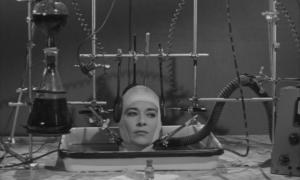
Still from 'The Brain That Wouldn't Die', 1962.

Still from ‘The Brain That Wouldn’t Die’, 1962.

I’ve had conflicted feelings about civilisation for a few years – I enjoy the products of both agricultural and industrial civilisation as much as anyone AND I recognise that human civilisation has exacted a terrible price both on us and all the other species of flora and fauna on the planet. (It’s hard to read ‘Endgame’ by Derrick Jensen and stay blind to the negatives.)

There are a few fundamental factors that have driven our evolution as humans, including avoiding predators (see ‘Sculpted by Cats‘ by Frank Forencich – and buy the whole book, it’s great), finding food, managing environmental conditions, and gravity. Basically, moving about, and managing external loads and forces (thank you Katy Bowman).

I mention gravity in particular because it would appear, based on listening to an episode of the Tim Ferriss show recently, it appears that some smart people, from Stephen Hawking to Jeff Bezos, believe that the future of humanity will not be on the Earth alone. Not only will it not be on the Earth but that it would be most sensible to get away from gravity all together, so that human life would continue on space stations rather than on planets. Perhaps, like me, you find your internal alarm bells sounding at this – “What about bone density?”, “What about muscle mass?”. Further listening/research suggests that this might be a narrow view of the future of humans. Maybe the future doesn’t involve physical bodies at all. I love how science-fiction this becomes, because I like how sci-fi’s so often questions the nature of existence. Could it be that the future of humanity is as the gravity manipulating “intelligence” in ‘Interstellar’, who don’t appear to have a physical presence. It must be amazing to work in fields where this kind of thing is being contemplated.

Fascinating as this is, we remain physical beings for the moment, and at least for our lifetimes, shaped by our evolution and the factors mentioned before. Our physicality is central to our existence, and to our health. If you’re not utilising and enjoying your physicality it’s as if you’re preparing for this non-physical future that, if it comes, may be centuries or millennia away.


 

Is Pilates Really Enough?

February 5, 2016 — 9 Comments

This is a question that seems to crop up amongst teachers from time to time, with supporters on either side of the argument. Benjamin Degenhardt reminded me last year that what Joseph Pilates was interested in, was promoting, was overall health. He was concerned with a bigger picture than ‘core stability’, or ‘fitness’ in the gym-focused/endurance event sense (“She’s really fit, she’s run a marathon.”) that tends to be the dominant interpretation these days.

So does the regular practice of Pilates provide everything necessary to be considered fit, in a holistic sense? Perhaps the truth is that it depends. We might run into problems with definitions of the word ‘fit’. I’ve written about this before but, to save you reading more, I like: “greater tolerance to shifts in environmental parameters and biologically mediated challenges” (words by Suzanne Scott). I also like to think of fitness in terms of a capacity to express one’s full homo sapien potential – “are you human?”, if you like. Where being human means, to borrow from Kelly Starrett, that you can squat to take a pooh in the woods; and, to borrow from Katy Bowman, you can pull your own weight with your arms, which is to say you can do a pull-up. While they may not be very common, these are normal things for a human to be doing. (Please check in with yourself here – have you started making a list of reasons for not being able to squat/pull-up? or a list of people whom you know who have good reason to not be able to do one or both of these things? If so, why did you do that?)

Some other expressions of being human: walking, running, crawling, climbing, swimming, playing, dancing (the last two perhaps equalling physically engaging with other humans). And, beyond the realm of movement, to do what’s required in order to eat nutrient-dense foods from a variety of sources; to tolerate a range of temperatures (as in the definition of fitness above).

I got started in writing this because I sometimes feel, when working with teachers in training, and running a studio where a number of people teach, that I want those teachers to believe in more than teaching Pilates, or to see that their mission could/should encompass more than knowing the Pilates repertoire inside out, and being able to teach it to others (though this would be a good start).

In an interview last year Kelly Starrett said:

“Squat down, feet together, knees together, heels down. Can you do that? Yes? No? If you can’t do that you’re missing full hip and or ankle range of movement. That’s the mechanism for your hip impingement, for your plantar fasciitis, for your bunions, for your pulled calf. That is the £*@<ing problem, and you should be obsessing about it.”

You. Should. Be. Obsessing. About. It. You should be obsessing about it. Let’s hope you don’t have bunions or any of those others, nevertheless, if you’re not able to express your full range of movement, you should be be obsessing about it. Can’t squat to the floor? Obsessing. Can’t do one pull-up? Obsessing. If anything is less than optimal you should be doing something about it.

I’m sure it’s not to everyone’s taste, but I always enjoy the way Kelly expresses himself. If you have a look at what he’s involved with you will see that Kelly is clearly trying to reach a lot of people, and a ‘black and white’ delivery probably works best for that. I suspect that a lot of Pilates professionals are anxious not to judge, or be judged, which is nice but I don’t believe I’m alone in sometimes needing to be told “what you’re doing is not good enough”. Self-acceptance, as in not hating yourself, is surely to be encouraged; self-acceptance, as in ‘this is as good as it’s going to get’ should surely be discouraged.

I don’t believe that Joseph thought it was enough to do his exercises. After all, he left us with instructions for how to shower properly (I’m not sure that it’s on YouTube but if you look hard enough I’m sure you can find the film). Never mind the biologically mediated challenges – do you have optimal tolerance to shifts in environmental parameters? No? Then Pilates will be a good start, but you’ll need more.


PS. Comments are very welcome, but will not be seen by the author on Facebook. If you would like to start a conversation with me please use the blog comments section.

Perhaps this is a heretical question…. the importance of ‘good posture’ to health and well-being is so widely recognised that it is beyond question. Certainly, in the world of Pilates, it would seem to be doctrine. Jillian Hessel tells us that good posture is “essential to a healthy, well functioning body.” The good news is that Pilates apparently has a solution – Pilates For Posture’s website declares: “Evidence has shown Pilates to….improve posture…” (These are two examples out of many, and just happen to be near the top of my search results. See here, and here, for a couple more).

I accepted the importance of posture for years, as well as ‘postural optimisation’ being a reasonable goal for someone’s Pilates practice, and I was a little irritated by, for example, Todd Hargrove questioning links between posture and pain – why ask the question at all when we know that bad posture is bad for you? I started to be curious and question my own orthodoxy on this subject first when I noticed that people I was taking workshops with, in particular with MovNat and with Ido Portal, who were effortlessly wonderful movers, had (to my Pilates teacher, good posture obsessed eye) crappy resting positions. In other words, when they were relaxed, they were really relaxed, and clearly not trying to hold themselves well. To reiterate, when they wanted or needed to move they were graceful, supple and strong. When they didn’t need to move they did not seem to be controlling the form their body took.

thumb3_leopard_relaxing_in_a_tree_after_lunch

Needs some postural training?

More recently someone I was training with said “posture is reflexive”, which really got me thinking. It ties in with ideas of energy efficiency that I gleaned from basic evolutionary biology – as a species we are ‘programmed’ to use as little energy as possible; and with an idea I got from Katy Bowman: no one is ‘out of shape’, we are all in the shape that our brain/body thinks is best for us, based on the environment and inputs (nutrition, movement etc etc) we receive. So ‘posture is reflexive’ means that at any given moment your brain will organise your body according to the best (most energy efficient) strategy that it has available, based on the information it has received. You can consciously organise your posture, until your brain is occupied with something else – if your job is to sit or stand up straight that’s great, but if your life requires you to do anything else then postural organisation will quickly take a back seat. To say that your posture is a determinant of your health is putting the cart before the horse – your posture is a manifestation of your health, and ‘fixing’ your posture, however fleeting that might be, will not fix your health.

Problematic postures are only problematic when they indicate poor movement strategies. If someone’s default standing position is a swayback, and they have ‘glute amnesia’, the solution will be to teach them to move, not to teach them to stand. If someone’s sitting position appears to be causing them problems with their neck, shoulders, back, digestion, breathing etc. the solution won’t lie in teaching them to be better at sitting (just as a more ‘ergonomic’ chair won’t help), but might lie in helping them to sit less and move more. I understand, too, that someone’s posture can be a product of their emotional state. In this situation teaching posture doesn’t present a solution, and teaching movement actually might.

Assessing someone’s standing posture may be useful in terms of having quick/simple clues as to what kind of movement they have the most urgent need for, and perhaps there’s a movement assessment that will serve the same purpose, or do better. Beyond that, is there any point in teaching someone how to stand, or sit?

What’s Your (Pilates) Dogma?

September 19, 2015 — 1 Comment

images-2Being so closely associated with ‘dogmatic’, it’s easy for dogma to be something of a dirty word. Yet, if we take my dictionary definition (overlooking the first, which is specific to religion) – “a belief, principle, or doctrine or a code of beliefs, principles or doctrines…” – then it seems essential to any purposeful practice. We may think that we have no dogma, or dogmas, but it is/they are probably always there. Ido Portal wrote about the necessity for, and perils of, dogma and speaks about it eloquently (if you’re at all curious about Ido Portal and want to know what he’s about, this is a great place to start), and he got me thinking about Pilates and my own dogma.

A recent Facebook post (so often the catalyst to writing) made me think about dogmas within the community of Pilates professionals – inextricably linked with the politics and associated flags that get waved, particularly on social media. In this particular case the postee (is that a word?) was expressing (she seems to be a ‘heart on sleeve’ kind of woman) her unease, guilt even, at having enjoyed movement that wasn’t ‘classical Pilates’ in a place that called itself a Pilates studio. What follows is not directed at any individual, aforementioned or otherwise.

If I had to pin it down I would say that my professional dogma (the code that drives, motivates, sustains and nourishes me) is ‘To help people toward their full movement potential.’ It might even be distilled to ‘To help people to feel better about/within themselves’. On the back of my personal experience, and the bulk of my training, Pilates is the method that I primarily employ, in accordance with this dogma. We call our studio a Pilates studio, I will argue for the importance of a systematic approach to Pilates, I will rail against the encroachment of ‘current knowledge and research’ into the Pilates teaching profession, and acknowledge the genius of Joseph Pilates, but my dogma is not ‘Teach people the Pilates Method’. And it’s definitely not ‘Teach Pilates the way Joseph Pilates taught it’. While the latter seems to be commonly viewed as a sign of integrity, or upholding the truth, I’m not sure that it’s even possible. We have various versions of ‘what Joseph Pilates taught’, some of which are asserted more vigorously than others, but they may all be equally true. I suspect the real truth is that only Joseph could teach Pilates ‘the way Joseph Pilates taught’.

If you are a Pilates teacher, what is your dogma? I’m writing this guessing that some teachers’ dogma will be ‘to teach people Pilates’. Perhaps even ‘to teach people true, classical Pilates’. I do believe that there’s value in seeking to preserve a pure ideal (however tricky that may be, in this context, to pin down). At the same time, does your dogma serve you, or do you serve your dogma? Is being good at Pilates an end in itself? Is this the motivation for the people that come through your door? Are many people motivated to learn Pilates as it was originally taught? Or is this comment on Facebook more accurate: “clients don’t seem to care. They want a work-out and they want to feel good about themselves.”?

In the Ido Portal interview that’s linked to above he quotes John Ziman on the subject of specialisation: “A scientist is a person who knows more and more about less and less, until [s]he knows everything about nothing.” If your dogma is to teach Pilates in the classical way (or however else you might phrase it), is there a danger that you become too specialist? It’s almost a law of sports science that specialists will eventually break, whereas generalists show greater resilience. We might say that the more you specialise the less able you are to adapt.

We have an understanding with everyone that teaches in our studio that the end goal, for anyone who walks through our door (regardless of age or ability), is to teach them the Pilates repertoire, on the basis that a) we call ourselves Pilates teachers, and b) Pilates is a very effective tool for at least beginning to move well, and for feeling good. If your dogma is to help people feel better Pilates may well offer the very best tools for most people, and if you’re research has opened other movement/exercise doors for you then you may have all sorts of tools for a given client – Mum of a baby and a toddler whose back pain is such that she can’t pick her children up, for example. However, if your dogma is to teach Classical Pilates (or ‘safe Pilates based on current research’, or Stott Pilates etc. etc.) your tools may be more limited – or worse, absent. In which case your dogma has ceased to serve you, and you are in service of your dogma. I think this is sometimes referred to as the tail wagging the dog.

I do Movement, Part 3

September 13, 2015 — Leave a comment

Or, if you haven’t already, you really should attend an Ido Portal workshop.

I’ve already written (here and here) in the immediate aftermath of attending Movement X and The Corset, and then Movement X and Handbalancing and have been thinking for a while of trying to express my lasting appreciation for those experiences. I was galvanised into action by Ido’s ‘Day of the Teacher’ post on Facebook.

I wish this could be one of those “6 months of online coaching” posts, but I’m afraid that I have not felt able to make that commitment. So, if you’re like me and thinking “I can’t make that commitment quite yet” then I’m writing this to let you know that what you learn by attending Ido’s workshops will last you a long time, making them very easily the best value for money of any personal/professional development courses that I’ve done. Affordability is certainly relative, and if cost is an issue I won’t tell you that you can afford it, just that you really should. Not only is the content ‘gold’, it is delivered with a level of skill and professionalism that is, I believe, unusual in the sphere of movement workshops. I’m in the midst of a course in teaching adults and know that your own skill and knowledge counts for only a small percentage of your ability to teach. I’m almost more impressed by the quality of the delivery than the quality of the content.

To pick out a single example, once or twice per week my wife and I follow the handstand training plan that we learned at the Handbalancing workshop, and every time I marvel at how effective it is. I’ve made a lot of progress in the 3 months since we attended the workshop and I’m in no doubt that I’d be far ahead if I managed to make it 3/4 times per week. And this is just a small portion of what we learned over two days. It is, if you’ll pardon the cliche, the gift that keeps on giving.

Movement X blew my mind, and changed my entire perspective on movement and what’s possible for me, and for the people that I teach. The Corset has given me tools for every conceivable joint prep/mobility challenge and I’ll be exploring that material for years to come. So much gratitude to my teachers Ido, John and Odelia, and Josef (he was teaching a different method when I met him, and I still have good memories). I hope to be your student again soon.


Unknown

Stott Reformers For Sale

September 13, 2015 — 1 Comment

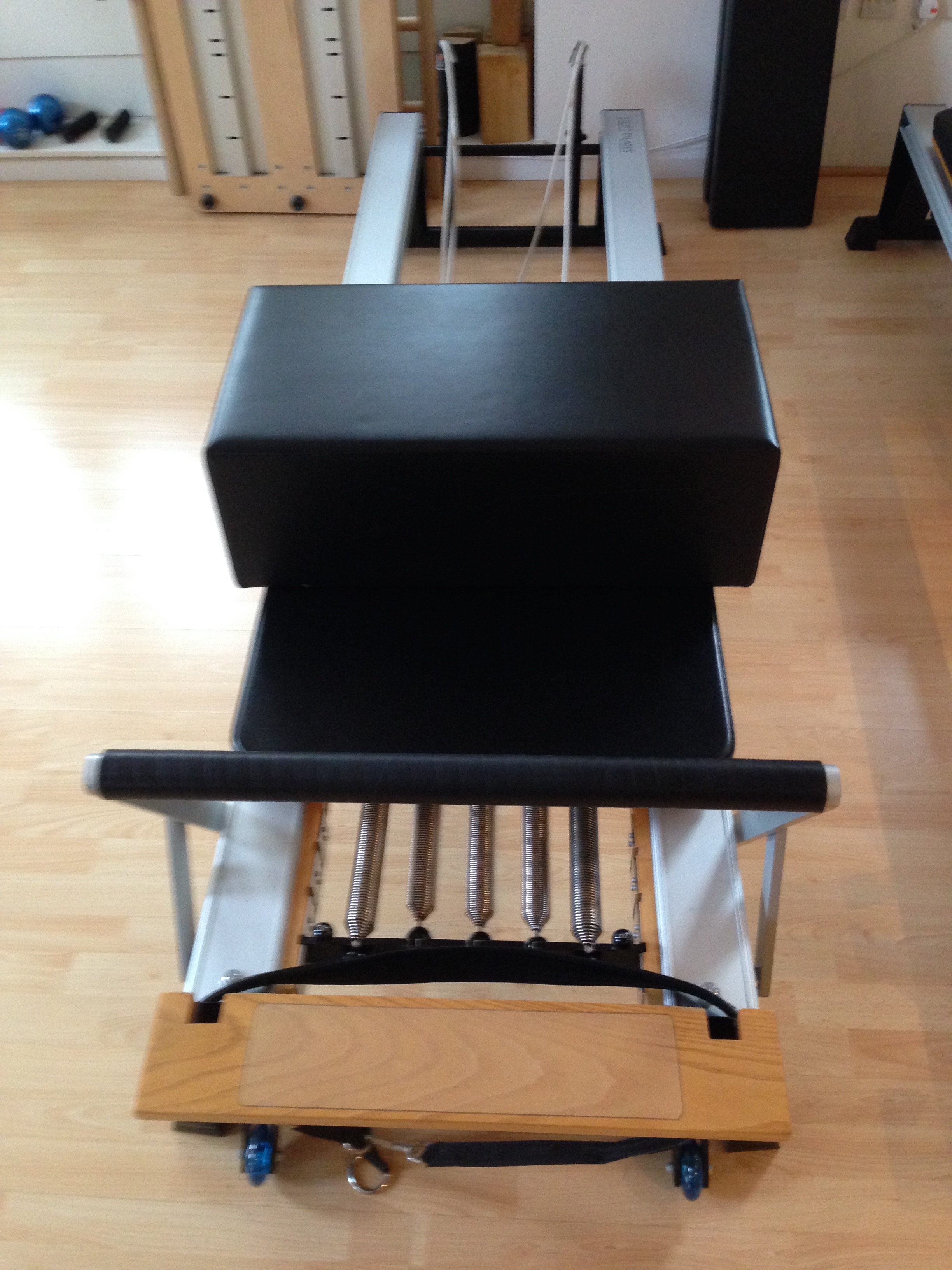
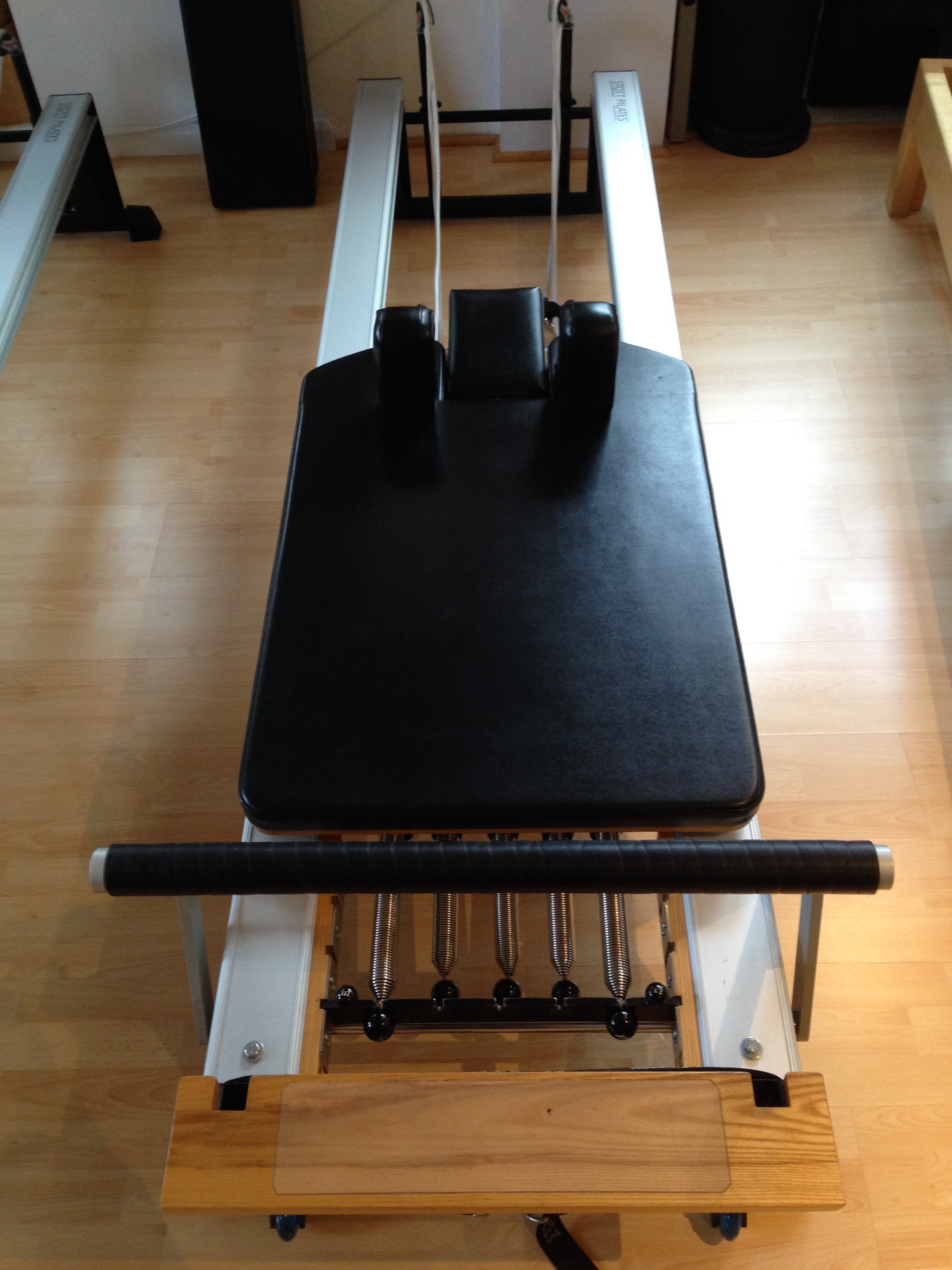
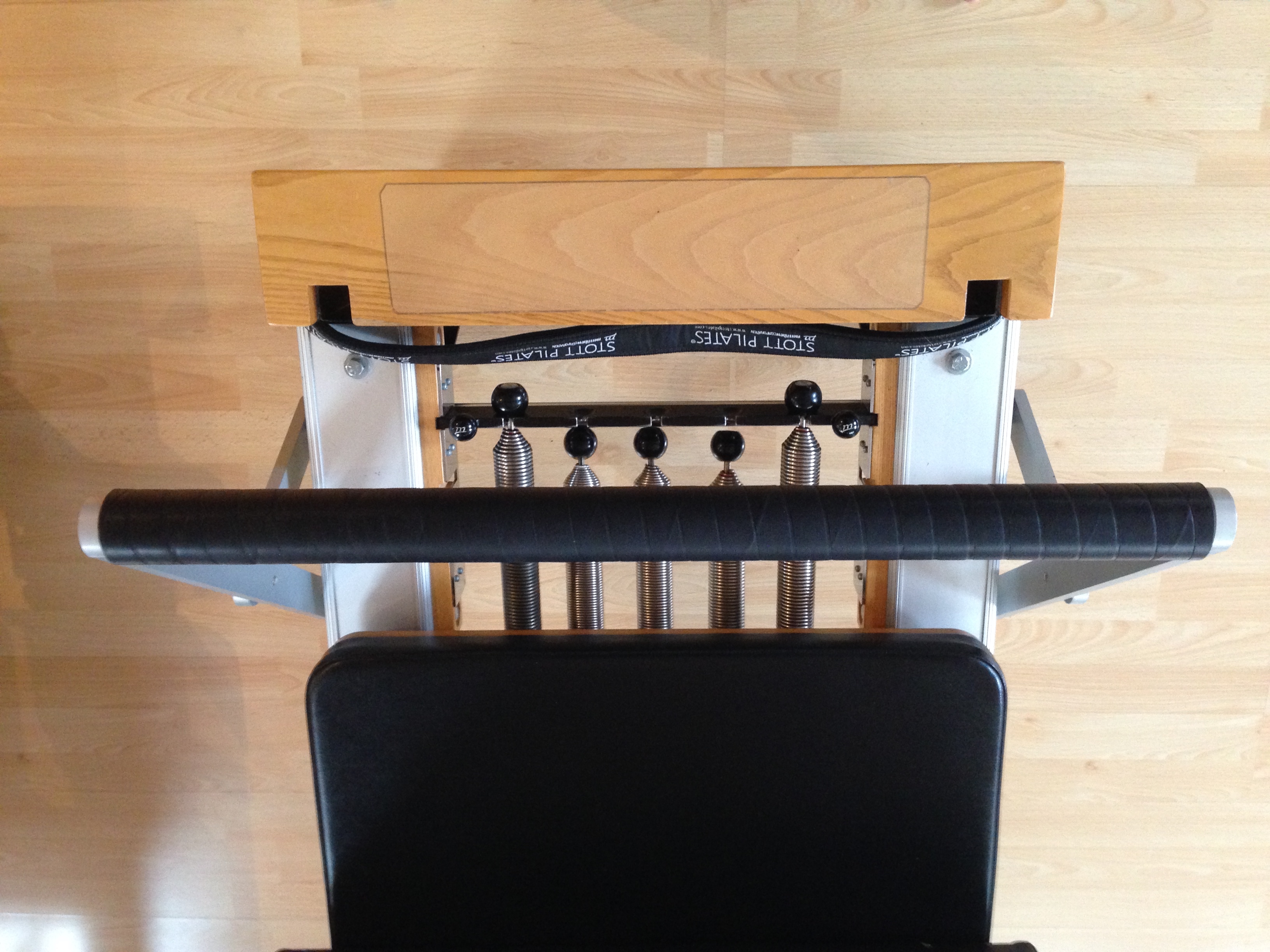
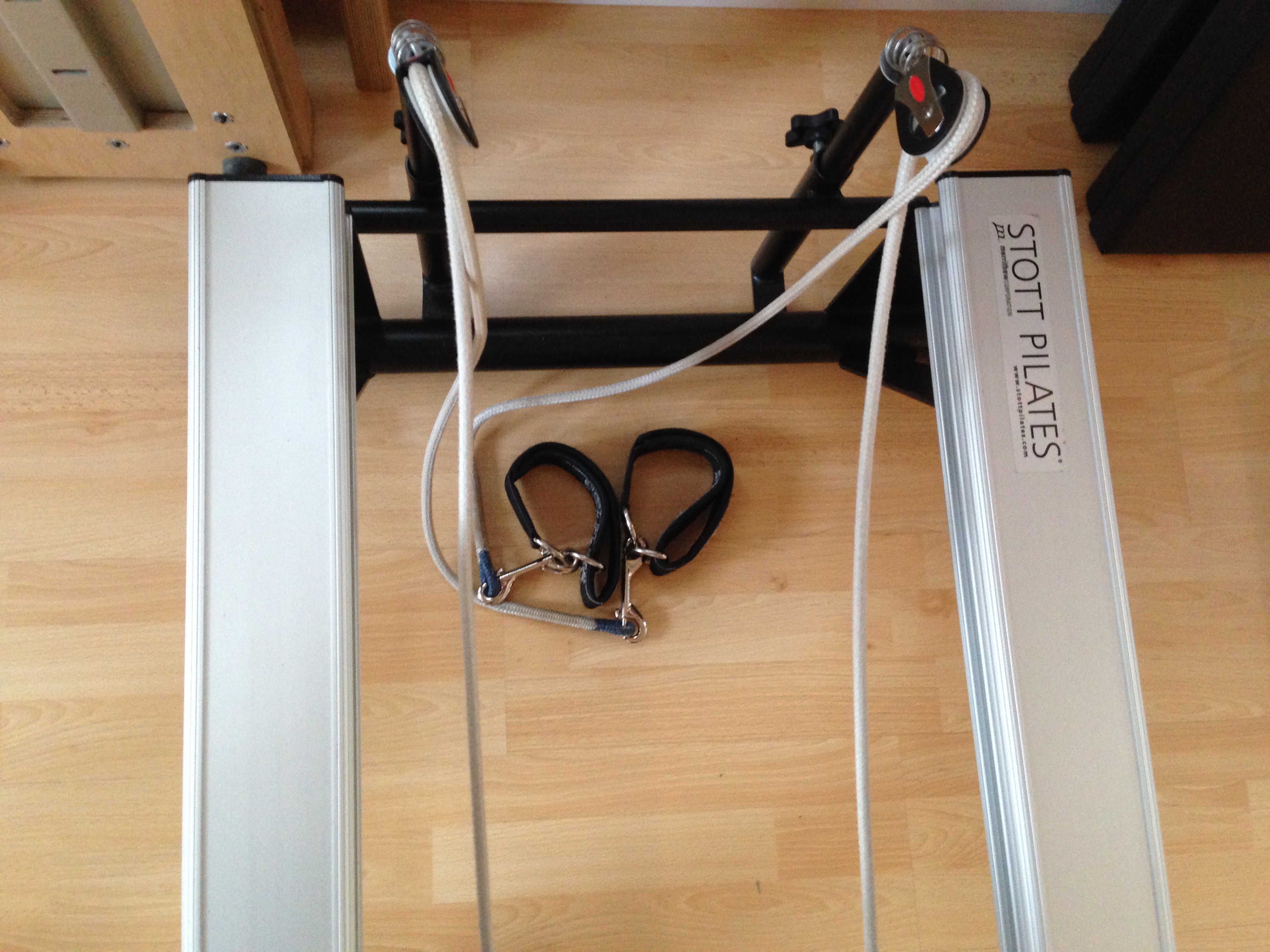
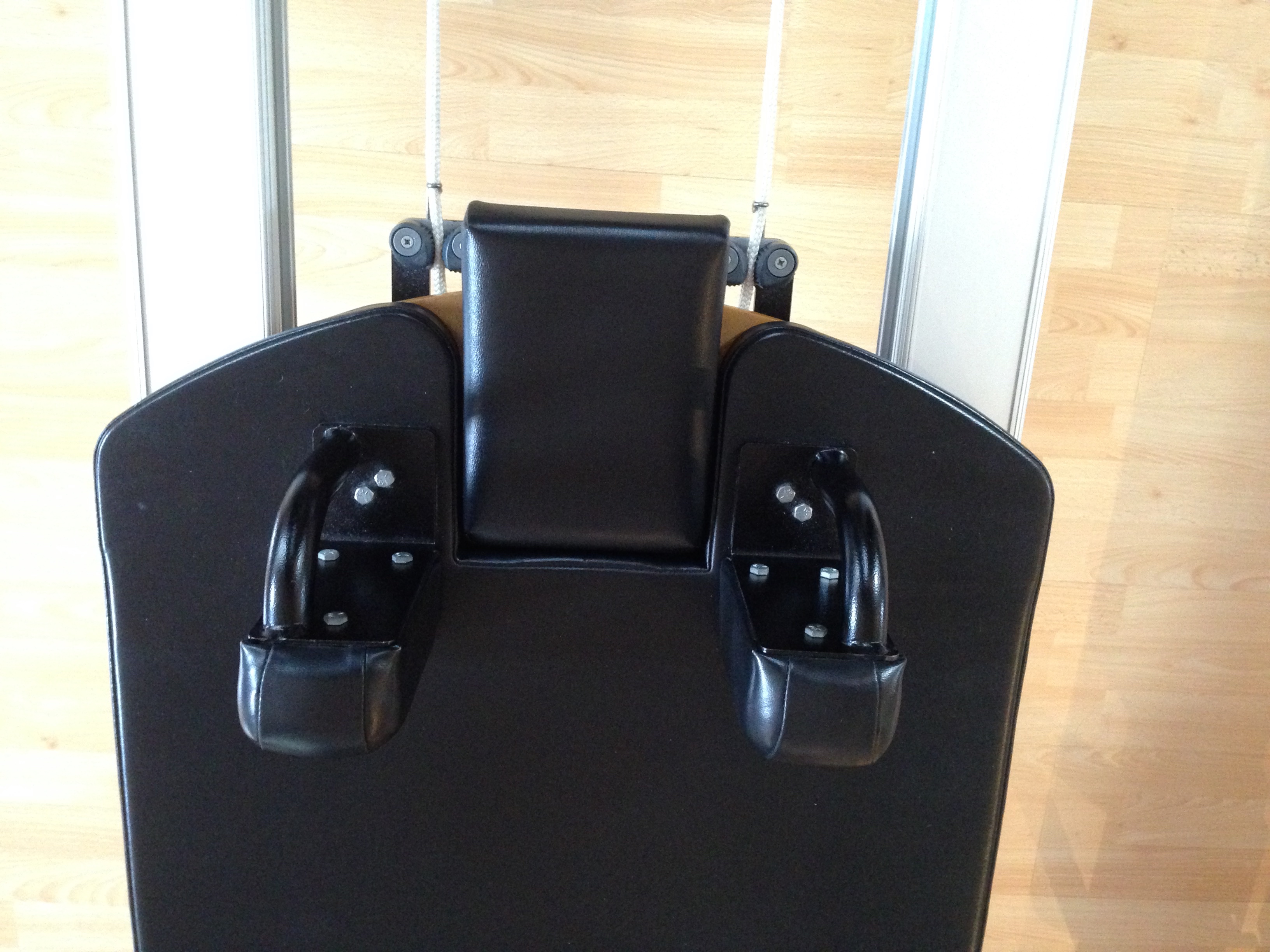
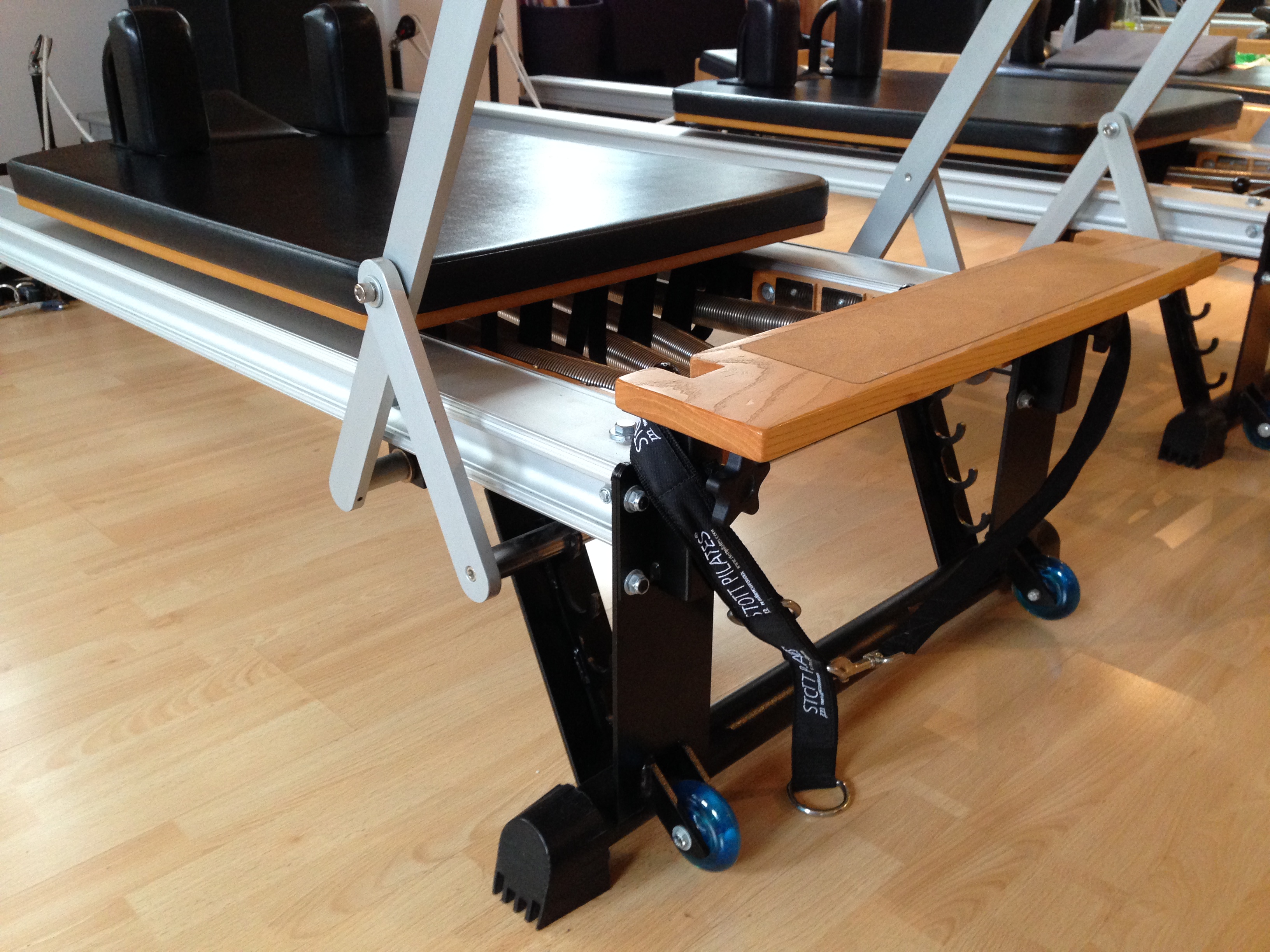
IMG_2469 We are changing the reformers in our studio, in keeping with the way that our teaching is changing, so have 2 Stott ‘Studio’ reformers for sale. They were called Studio reformers when we bought them 7 years ago, though the same model is now called the V2 Max.

They have been very well maintained and are in excellent condition. One has 4 red springs and 1 blue spring, the other has 3 red springs, one blue and one white spring. We are including sitting boxes and jump boards. The sitting boxes have some minor nicks to the upholstery around the base.

The reformers will be available for collection from Ealing, London W5 (UK) at the end of October.

PRICE £2000 each

You can see the current UK price list for Stott apparatus here.

Please email mike@pilatesinmotion.org for more information.


IMG_2471 IMG_2472 IMG_2473 IMG_2474 IMG_2475


il_340x270.515985472_r48n

Easy answer….

I first heard the word carnism about a year ago, along with a brief definition: “a term used by psychologist Melanie Joy and others to describe the ideology that supports the use of animals for food, including meat. The argument holds that carnism is a dominant belief system supported by a variety of defence mechanisms and mostly unchallenged assumptions.
At the time it was easy for me to dismiss. As an enthusiastic omnivore I had little patience for what appeared to be an attempt by vegans to stigmatise something I consider to be entirely natural.

More recently I was reminded of the concept and something (probably that the reminder came via someone that I like and know to be both sincere and humble) made me reflect on the concept for a while.

Research suggests that beginning to eat meat 2 to 3 million years ago was what triggered an increase in the brain size of early hominids and made possible the evolutionary jump to homo-sapiens. The excellent “The Story of the Human Body” by Daniel E. Lieberman clearly describes this element of our evolutionary trajectory. Interestingly, other research also suggests that raw diets cannot grow or sustain big brains in a species, thus cooking also made us human.

The concept of meat eating as a belief system seems like quite a big idea. One that separates the behaviour from instinct or socialisation and proposes that viewing animals as food is akin to a religion. A religion that most of us have unconsciously subscribed to.

I’m assuming that the term carnist (a follower of the carnism belief system) is usually intended as a perjorative. Carnivore seems to be a perfectly adequate word to describe a meat eater. That said, if you describe yourself as a vegan it carries a meaning beyond ‘herbivore’ and suggests a belief system – if you base your diet and lifestyle choices on a belief system I guess it’s natural to frame other choices in the same way. So perhaps my knee jerk initial rejection was unreasonable.

Here’s what I’m left with: If the research can be trusted, our brains are as big as they are and thus able to wrestle with philosophical and ethical problems (that our primate cousins appear not to have time for) because our ancestors ate meat. So we owe our very existence, and our capacity (never mind the luxury of time spent doing things other than gathering and chewing) to think deeply about our behaviour, to the practice of eating meat.

Could anyone have coined the term ‘carnism’ without the hominid and human practice of eating meat? Framing language and philosophies to critique meat-eating our actually a luxury afforded to our species by meat-eating. Ironic, no?

ivory towerYes, I’m afraid I’ve been browsing Facebook forums again – and becoming struck by the tone of some teachers’ comments with reference to other movement disciplines, and other exercise professionals. Warning, generalisations follow.
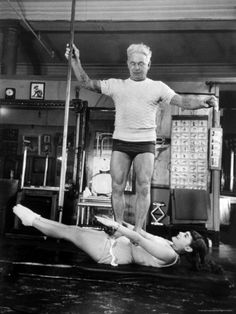
Is it me, or is there something within our training that implants the idea that a knowledge of Pilates somehow gives us an understanding of all movement, or makes us a little more expert than other fitness professionals?
I come from a Pilates teacher training background where we were encouraged to believe in, and promote ourselves as having “the highest standard”. There was no-one in the country better qualified, more knowledgable than us. (Perhaps it is just me, or my egotistical interpretation of what I heard and saw…)
It was, and according to Facebook, still is fairly standard to look down on the methods and the level of knowledge of personal trainers, for example. I’m in no doubt that there are some shoddy PTs out there, just as I’m in no doubt that there are some sub-par Pilates teachers out there (let’s not forget that you don’t need to have ever attended a Pilates classes to gain a Level 3 Diploma in teaching Pilates in the UK).
Why do we appear to feel superior?

I have a certain affection for CrossFit so I may be particularly sensitive to Pilates teachers taking a swipe at it (though I’m sure that CrossFit HQ isn’t at all worried). It seems to be a widely held belief that CrossFit ignores bad form in its athletes, or maybe even teaches bad form. I’ve done the Level 1 CrossFit Trainer course and can attest that bad form is not encouraged, and that trying to coach someone who is moving at a speed not usually seen in a Pilates studio is a tricky skill. Never mind – looking in from the outside us Pilates teachers can see enough to ‘know’ that CrossFit is bad, the coaches aren’t bothered about technique, and the practitioners are sure to be injured soon. We may even crow that those poor mugs will be knocking on our door fro help once they have injured themselves – I’ve seen comments like this many, many times. In short, we (Pilates teachers) understand and can coach movement much better than a CrossFit coach can.

It may be true that more people injure themselves doing Crossfit than injure themselves doing Pilates, but just because you see something in a gym, or on YouTube that makes you wince, doesn’t mean that high numbers of CF athletes are hurting themselves. (On the other hand, figures suggest that in the USA, between 37 and 56% of people who run regularly are injured every year. Yes, up to half the Americans who run regularly are injured annually. That’s a dangerous activity, and one in which poor form and technique routinely goes unnoticed.)

Pilates is about whole body health so let us consider the health outcomes from CrossFit. I can’t speak for every facility, of course, but I believe it’s safe to say that the majority of regular CrossFitters will be encouraged not only to move a lot – to challenge their physicality – but also to think about health fundamentals like their food quality and their sleep quality. Not to mention that they are encouraged to “regularly learn and play new sports” (from founder Greg Glassman’s ‘World-Class Fitness in 100 Words’) Ido Portal, who does not suffer fools gladly, has said: “I think the CrossFit community is a very open community….they’re hard workers, they’re open-minded, mostly…..Most Crossfitters are not humble enough to see what is missing but, once you show it to them, they accept it.” Can Pilates teachers truly, routinely boast the same kind of outcomes, or the same kind of approach to overall health?

Getting back to movement, I will always agree with anyone who says that the pursuit of Pilates (in the original/traditional form) will provide an excellent foundation for understanding human movement but does this make us omniscient? Firstly, for Pilates to really teach you about movement I believe that it has to be treated as a system, without unpopular movements being left out, and to be seen as a series of patterns. It was very interesting for me to see recently that there was broad agreement among the Pilates teachers commenting on it that a particular picture of a press up represented ‘bad form’. However, when it came to solutions to fix this bad form the answers were quite varied, indicating a lack of (amongst that small sample) collective understanding. Most alarmingly, while none referred to the hip joint’s role in spinal stability under load, there were suggestions that abdominal muscles should be pulling into the spine. I suspect a great many CrossFIt coaches would know that you do not effectively create spinal stability, especially under high load, by drawing your stomach in.

Until, as a profession, we raise our game, do we have any business to be feeling superior to our movement teaching colleagues from other disciplines?


Ivory Tower image borrowed from: http://3menmakeatiger.blogspot.co.uk

d3effdb960d4bb717d1900b994336258

She is NOT pulling her stomach in!

Regular readers (if you exist, thank you) will know that I’m a fan of Katy Bowman’s work. I’m particularly intrigued by her thoughts on compression garments, and how they may impact someone’s body while doing Pilates. For example, if one were to wear abdomen compressing ‘shape wear’ what impact might that have on breathing -diaphragm-ribs-spine etc? As Katy says, compressed innards don’t just disappear. They have to go somewhere. If you’re underwear is effectively shoving your abdominal contents up into your diaphragm what will that do to not just your breathing and movement but your digestion too. What if your ‘slimmer shape’ is actually  interfering with your food’s passage through your tubes?

“People’s shaping underwear choices have got nothing to do with Pilates!” I hear you say, and that’s true. But a recent podcast interview with Katy B got me thinking….. How many of us have taught people to pull their stomach in?

At the same time that I’m happy that ‘navel to spine’ seems to be gradually disappearing from the Pilates lexicon, I do think that some kind of ‘abdomen in’ cue may well be useful in certain circumstances. However, the trouble may arise when we, inadvertently or otherwise, help to create or reinforce the impression that good posture involves pulling your stomach in.  Let’s hope that we don’t, but if we do then we are in effect encouraging clients to be their own compression garments, and to use their muscles to squash their abdominal contents, thereby possibly interfering with digestion, breathing, continence, lymph circulation and so on. Spending your days trying to constantly compress your abdomen is not a good strategy.

‘Paleo Coach’ author Jason Seib introduced me to the idea that a fitness/exercise regime that is undertaken with aesthetic goals rarely works out. Instead, he advocates that the goal of any such programme should be health, and maintains that aesthetic goals will very likely be accomplished by achieving better health. That seems to be very much in keeping with Joseph Pilates’ philosophy, and the principle of Whole Body Health. ‘Flat Abs’ might be a short term selling point, but flat abs (or six pack abs, for that matter) don’t say anything at all about what’s going on ‘under the hood’ (your health, in other words), and they may well not be what a particular body needs.

Whilst there may be vigorous debate, and plenty of argument on social media’s Pilates teacher forums, it seems that there is usually broad agreement on the ‘teach the body in front of you’ mantra. I take this to usually mean that we shouldn’t adopt a ‘one size fits all’ approach to teaching, and make allowance for individual capacity, restrictions, pathology etc.

There wouldn’t seem to be much to take issue with there, except that (while I’ll never argue that human bodies aren’t totally amazing) we are so much more than our bodies. At least in the muscle, fascia, bones sense. I’ve often felt uncomfortable hearing a teacher say to their client at the beginning of a class “How’s your body?” The teacher may well know all about the non-corporeal factors influencing their client’s life, but I’m sure that there are times that the question is implicitly stating “I’m only interested in how you are physically, and not interested in anything else going on in your life.” I’ve met teachers who know nothing about their clients’ hobbies or interests, and even one who didn’t know what a client did for a living. Can you teach a body if you know so little about its context?

Are the exercises we teach actually helping people’s lumbar spines to become more stable? Unlikely. Is there something particular to Pilates exercises that helps people to ‘improve’ their posture? No – posture is a manifestation of our entire system, not of biomechanics alone (thank you to David at AMN Academy for helping me to understand this).

At a time when it seems we can be less and less certain about exactly how our teaching affects our clients, don’t we need to be teaching the person in front of us? Perhaps a bit like the ‘person-centred approach’ in psychotherapy – we help to create the appropriate environment for each individual to make their own changes.

‘Teach the person, trust the body’, maybe?